Troubleshooting rapid Log Files and Database growth in Exchange 2010

In this article let me discuss about troubleshooting unusual growth in log files and database in Exchange 2007 and Exchange 2010.

It’s always better to check and validate first before we jump into any troubleshooting. It’s better to check first from what time  the log files and the database starts growing rapidly.

We can probably filter out events for any related information about logs and database in the application logs in the affected mailbox server.

Also we need to collectively gather all information about the list of third party software’s installed and running on the affected mailbox server.This could be the problem as well if the handshake between Exchange and third party agent is broken.

I have classified  few troubleshooting steps which would help us in narrowing down and rectifying these kind of issues.Below are the list of troubleshooting that can be possibly done .


EXMON

The first step that would easily help us in identifying the problem is using EXMON tool to see if there are any user’s unusual activity which causes the log files to grow rapidly.

You can download the exmon tool from the below location

http://www.microsoft.com/en-us/download/details.aspx?id=11461

Run exmon tool and sort the the value by % cpu and look for high CPU consuming users. Also you can check the log bytes column to monitor the log growth.

If you identify any potential users then you can see the following things

  • See if there are any email with a large attachment which is stuck on the outbox.
  • Also you can monitor if there are any spam mails circulating on the affected user’s mailbox.


Exclude FILE LEVEL AV SCANNING

If the AV scanning running on mailbox servers is not aware of exchange databases and log files then this will definitely cause the transaction logs to grow rapidly.

Following things can be checked

  • Check if there are any recent updates that happened on the AV scanner on the mailbox servers which might remove  exchange databases and log files exclusions.
  • Ensure that AV exclusions are set for Exchange databases and Log files on the AV scanner in the mailbox servers.
  • Disable AV scanning on the affected mailbox server where transaction logs and DB are growing rapidly. Monitor for few hours and see the log files and database growth and compare the results.


OPEN RELAY

Check if the server is an open relay to the internet, there will be tons of transaction logs. You will also usually see a bunch of items in the junk mail folder. So ensure that the environment is not open for relay as huge amount of spam mail circulated also will cause the server performance and server to send out more number of spam messages internally as well as externally.

It’s better to have a look at all the queues in all hub servers to ensure that no spam messages are been sent out from our organization in such kind of scenarios.


PUBLIC FOLDER REPLICATION

  • Check if there are any PF replicas initiated recently on the affected mailbox server recently as it could cause the problem.
  • Check in the message queue if there is more number of public folder replication messages.


CHECK BACKUP CONFIGURATION

If you have any backup running in the environment ensure that the backup is scheduled properly. Ensure that you are running only full and incremental backups as only these two types of backups will truncate the logs and the rest wouldn’t have the capability to truncate them.

Imp Note:

If a server hosting the data being backed up is a member of a database availability group (DAG) and hosts both active and passive database copies, you must disable the Microsoft Exchange Replication service VSS writer. If the Microsoft Exchange Replication service VSS writer is enabled, the backup operation will fail.


To disable the Microsoft Exchange Replication service VSS writer, perform the following steps:

  • Log on to the server by using an account that has local administrator access, and then start Registry Editor (regedit).
  • Navigate to HKEY_LOCAL_MACHINE\Software\Microsoft\ExchangeServer\v14\Replay\Parameters.
  • Add a new DWORD value named EnableVSSWriter, and set its value to 0.

Exit Registry Editor and then restart the Microsoft Exchange Replication service.


Bulk Mailbox Move

If there are any recent bulk mailbox move that is happening that could generate lot of log files if few of the mailboxes are larger in size and if it has more corrupted items. Probably for this as a temporary fix until the mailbox move completes you can enable circular logging on the source and the destination mailbox database. Ensure that you need to disable circular logging once the move is completed as enabling circular logging always is not a good choice.

Hope this helps in scenarios where we come across scenarios  in troubleshooting unusual  rapid growth in database and log files.

Cheers

Sathish Veerapandian

Overview and Troubleshooting MailTips in Exchange 2010/ 2013

MailTips are useful information displayed to the end users while composing and trying to send messages to any users in their organization.

When end users select any recipient for which we have Mailtips enabled that particular information will be displayed as a tip after the GAL resolves that user in the recipient tab.

In order to troubleshoot MailTips its better we can understand the functionality of MailTips first so that it will be easier to identify and provide a fix. Let’s   see the overview and functionality of MailTips first and then we will look into troubleshooting scenarios.

How MailTips work:

  1. Sender creates a new message and addresses the message to a recipient.
  2. During message composition the client submits a GetMailTips request to the Exchange web services on the CAS server. The request is submitted as a SOAP message over HTTPS.
  3. CAS/Exchange Web Service receives the GetMailTips SOAP request and uses the information to authenticate the SOAP request and then queries:
  • Active Directory – for the requested objects (recipient, organizational).  The active directory request is executed as an LDAP query.
  • Mailbox Servers -to retrieve “out-of-office” messages, “mailbox-full” status, or any customized MailTip configured for the recipients.
  • The Active Directory and mailbox servers return the results to exchange web services.
  • The Exchange web services returns the result to the client.
  • The client will be able to see the MailTip information for that configured user account.


EWS is the main component for MailTips.

Mail Tips are available from client versions   Outlook 2010 and Outlook Web App as well.

Note: MailTips will not work when outlook is in offline mode.

Mail tips are triggered in the following scenarios

  • When a user resolves a recipient in the GAL.
  • When a user uses reply to all option in a message.
  • When a user adds or removes any attachment in a message.


Now we will look at how to configure MailTips in Exchange 2013.

MailTips is an organizational feature but still it can be enabled for each and every recipient individually as well. In order to enable MailTip for each individual we need to have MailTip enabled in the organizational level first.

We can run Get-Organizational config | fl mailtip* to see the MailTips configuration for a whole organization.

mailtip1


Basically we have 5 different types of MailTips in organizational level. Apart from these we have Active Directory Based MailTips which can be enabled as well. Now we will look in to the different types of MailTips and their functionality.

MailTipsALLTipsEnabled

This enables or disables the MailTip’s option totally in organizational level. If this option is disabled then MailTip functionality will not work for any users.

MailTipsExternalRecipientsEnabled

This option gives any tips to the sender if there are mail tips enabled for any user outside the organization.

Eg: Most of the organizations are much concerned about any internal confidential information should not be leaked outside for any reason. If we have this option enabled and if the user accidentally adds any external vendor, partner in a confidential trail email   he will be getting a mail tip of that information which displays that particular recipient will be shown with that custom message. This makes the sender very helpful in these kind of scenarios.

Steps to enable MailTip for external recipient

Set-OrganizationConfig –MailTipsExternalRecipientsTipsEnabled $True

When you run the above command MailTip with custom message for all external recipients will be displayed,


MailTipsLargeAudienceThreshold –

Gives the sender information if he adds more number of recipients in a mail than the configured threshold.

The default value is 25. We can change the value by running the below command.

Set-OrganizationConfig –MailTipsLargeAudienceThreshold <Desired Integer Value>


MailTipsGroupMetricsEnabled –

Displays the MailTips for the Distribution Lists and Dynamic Distribution Lists.

For example enabling this will give sender an info that the DL you are sending contains more than 100 members.

It is enabled by default. If you want to disable this feature you can run the below command.

Set-OrganizationConfig –MailTipsGroupMetricsEnabled $false


MailTipsMailboxSourcedTipsEnabled

This option gives the mailbox full and out of office message to the sender while he addresses message to a user whose mailbox is full or if he is out of office. This option is enabled by default.


Other Active Directory Based MailTips

Custom MailTips – Custom MailTip can be set for individual users with custom message by administrator.

Moderated Recipient -.  Is used to alert the sender that the recipient is moderated and that mail delivery may be delayed.

Restricted Recipient – advises that the message cannot be delivered to the recipient (when you are not in the list of users allowed to send e-mail to the recipient)

Message Size Limit – displays if the message the sender is composing is larger than configured message size limits in your organization.

Maximum Number of Recipients – displays if the sender adds more recipients than allowed. This value can be changed for each mailbox according to the configuration.

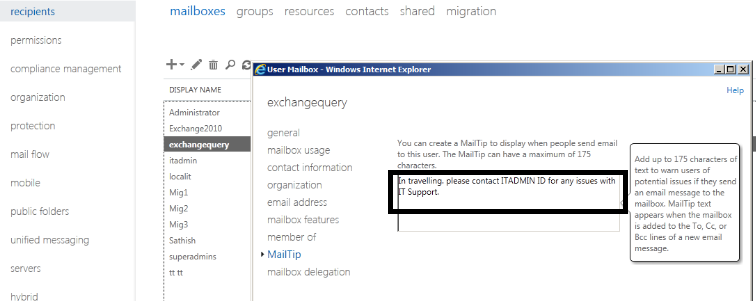
Below is an example of Custom MailTips.

In order to enable custom MailTips perform the following action.

Open EAC – Click recipients – select the mailbox for which we need to configure custom MailTips – and type the custom message and click save.


mailtip2


Below information is displayed for senders while addressing the message to the custom MailTip enabled user.


mailtip3


Now let’s have a small discussion in troubleshooting MailTips


First we need to ensure that owa is able to access the ews virtual directory without any issues. Also ensure that outlook is able to fetch the Autodiscover information.

  • First identify the MailTip issue is happening for just one user or multiple users. Also if it is will all users pick one user and start troubleshooting.
  • Check if the mail tip is not functioning in owa and outlook or any one of them.
  • Ensure that outlook is able to get the correct Autodiscover information.


Tools for troubleshooting MailTips

Exchange and Outlook provide tools for troubleshooting mail tip issues. Below is a listing of the tools that we can use to identify and resolve mail tip issues;

1.         Outlook 2010/2013 Diagnostic Logging (MailTips.log)

2.         Internet Information Server Logs

3.         Diagnostic Logging (Event Viewer)

4.         Performance Monitor Counters


 Steps to enable Outlook logging

File – Options – Advanced – Enable troubleshooting logging

Restart outlook, try to retrieve MailTips and you will get a below kind of log

You need to ensure that there is no error after GetServiceConfiguration for mailtips which is a successful transaction of MailTip.

Below is an example of successful result of a query of mailtips from outlook which shows in the outlook log.

<ex15m:ConfigurationName>MailTips</ex15:ConfigurationName>

</ex15m:RequestedConfiguration>

</ex15m:GetServiceConfiguration>

</q:Body>


<GetMailTipsResponse ResponseClass=”Success” xmlns=”http://schemas.microsoft.com/exchange/services/2006/messages“>

<ResponseCode>NoError</ResponseCode>

<ResponseMessages>

<MailTipsResponseMessageType ResponseClass=”Success“>

<ResponseCode>NoError</ResponseCode>


Similarly we can enable IIS server logging in the CAS server and look of there are any errors after get-service configuration for MailTips so that we will be able to identify the issue.

Also we can increase the following Perfmon counters for MailTips and see the results if we get any relevant information.

mm

Looking into the application logs in the event viewer will also help us in identifying the root cause.

The above troubleshooting can help us in identifying the MailTips issue.

Sathish Veerapandian

Overview and Readiness for configuring SIP trunk in Lync 2010/2013

What is SIP trunk?

SIP trunk is  a virtual  connection between Lync server(mediation server) in any organization  and the ITSP.SIP trunk is used to make a direct connection from your organization to ITSP(Internet Telephony Service Provider).

It helps us to extend any organization VOIP (voice over internet protocol) functionality beyond the firewall without the need of ip-PSTN or even a PBX.

In a simple term SIP trunk can be utilized to carry VOIP calls in following scenarios

1)  PC to phone Communications.

2)  Phone to PC Communications.

3)  PC to PC    Communications.

In addition to VOIP calls  SIP trunk can carry instant messages, multimedia conferences, user presence information, Enhanced 9-1-1 (E9-1-1) emergency calls, and other SIP-based, real-time communications services.

In some scenarios we can choose the SIP trunk to connect to the branch site through ITSP.


Advantages of SIP trunk

By using SIP trunk we can typically reduce the cost in making a long distance calls.

We do not need to have a PSTN or even a PBX.

We can consolidate our organization connections and PSTN in a single central site.

An enterprise user can make local calls i.e., within the organization and a long distance call to a  E.164-compliant number.


What is  E.164-compliant number ?

International public telecommunications numbering plan. The E.164 plan was originally developed by the International Telecommunication Union (ITU).

E.164 is an international numbering plan for public telephone systems in which each assigned number contains a country code (CC), a national destination code (NDC), and a subscriber number (SN). There can be up to 15 digits in an E.164 number. With E.164, each address is unique worldwide and it has its own number. With this 15 digits combination for each user there can be 100 trillion numbers generated all around the world. So there is no possibility in future that  we might run out of option in assigning E.164-compliant number for any user.

SIP trunk can be established in 2 ways

Centralised SIP trunk

Is a method in which all the branch site  connections come to a central site and then the connections are routed to the ITSP. This type of connection is Cost effective.

Distributed SIP trunk

Is a method where all the sip trunk are established of its own in each and every site to their own ITSP.

Reason for having Distributed SIP Trunk

Company sites can be in different countries

In order to provide Site resilience


How  do we implement SIP trunk ?

1) Order a SIP trunk subscription connection from any one of SIP trunk service providers.

2) Configure the external firewall to allow communication between SIP Trunk provider and your Lync Server with the Mediation Server role.

3) Make the necessary changes and publish the Lync Topology.

4) Create a dial plan and configure users for using enterprise voice.


SIP trunk service providers can give 2 types of connections

1) TCP connection

For this type of connection we need to have port 5060 open in the firewall for SIP trunk provider. For this connection there is no certificate required. This type of connection uses NTLM type of authentication since no certificate is required.

2) TLS  Connection

For this type of connection we need to have port 5067 open in the firewall for SIP trunk provider and then we need to get a certificate from the SIP trunk provider. This type of connection uses TLS-DSK since it uses a certificate for the connection.

We need to exchange few information between the SIP trunk service provider and our organization to configure the endpoints on both side for this type of connection.This configuration basically depends on what type of connection we are using for this SIP trunk and varies according to  different scenarios.

For MPLS and dedicated type of connection ,give the router public IP address to  ITSP . Ensure that ITSP’s SBC or gateway is able to resolve this address.

Also give the FQDN of the Mediation server.

For VPN connection, give the VPN server IP address to the ITSP

Note :

We need to get the ITSP gateway.i.e, their IP address and the FQDN .We need to specify these values in the mediation pool of the mediation server.


We need to have a Mediation server with 2 interfaces Basically 2 NIC’s.

Internal interface connects to the front end server for internal connection.

External interface – connects to ITSP edge component.(the external edge component of ITSP can be a router,SBC or an gateway)

The mediation server can either be collocated along with the front end server or it can be a standalone server according to the requirement. It’s always better to use the Lync server  planning tool to evaluate the front end server pool that whether it can handle the load. Else we can deploy the mediation server separately.

Exception:

If you are connecting to a SBC(session Border Controller) of a ITSP a dedicated Mediation server is required.

We need a connection to establish a SIP trunk from mediation server external interface to the ITSP external edge for any organization. Below are the supported connection types

1) Least fibre  Optic connection or T1 line

This one has the highest call carrying capacity, most secure and reliable one. Most expensive. Suitable for organization who prefer good quality of call and security. No VPN is required.

2) MPLS connection

Multi Protocol Label Switch is a dedicated line shared with other IP traffic and the bandwidth network is shared with other subscribers. No VPN is required. Drawback is that it can have excess of IP traffic,can interfere with VOIP unless VOIP is given as highest

3) Internet connection

Least expensive. VPN connection is required but less secure and low  quality.


Bandwidth requirements

Bandwidth planning is very important before making SIP trunk connection. We need to calculate according to the number of calls. That can be calculated with the below formulae

SIP Trunk Peak Bandwidth = Max Simultaneous Calls x (64 kbps + header size)


Codec Support

Lync Server 2013 supports only the following codec’s:

G.711 a-law (used primarily outside North America)

G.711 µ-law (used in North America)


Internet Telephony Service Provider

For ITSP you need to use only Microsoft certified ITSP.

How you implement the service provider side of a SIP trunk connection varies from one ITSP to another. For deployment information, contact your service provider. For a list of certified SIP trunk service providers, see Microsoft Unified Communications Open Interoperability Program website. For details about Microsoft certified SIP trunk providers, contact your Microsoft representative.

References :-

http://technet.microsoft.com/en-us/library/gg398755.aspx

http://blogs.technet.com/b/nexthop/archive/2013/04/10/configuring-lync-2010-server-to-work-with-level-3-sip-trunking-services.aspx

http://blogs.technet.com/b/drrez/archive/2011/04/21/configuring-an-intelepeer-sip-trunk-solution-in-lync-server-2010.aspx

Cheers 🙂

Sathish Veerapandian

Technology Evangelist

SysTools OST Recovery Software

OST files are just an image of the content from the server.When Outlook is used with Exchange Server in ‘Cached Exchange Mode’ we get the OST file downloaded , then OST files allows to access entire components.

There is no built-in option in Outlook to open or import OST files without configuring Outlook profile for that associated mailbox account.

At times we might run into a few complex scenarios for an VIP user where we need to recover emails in scenarios where  we are running out of backup options,no exchange database and if we have the last option to recover only from an old OST file.

There could be multiple reasons for converting the OST file. There are multiple ways in recovering and repairing orphaned and lost .OST files. There are 3rd party applications that allows to convert OST to PST,repair and corrupted ost file ,filtering and gathering required data from the ost file.

If only the client PC has crashed, We can always recover the data from the exchange server itself (ost is just a online copy of the mails and one copy resides on the server all the time).

In some circumstances there may be a need to open/import an OST file.

1) User has left the organization and mailboxes have been deleted crossing the retention period. But the local IT team has only the OST  file from the PC of the mailbox from which an important data needs to be extracted.

2)If the old OST file has corrupted, user needs the data of the old ost file which he took it from his laptop to be merged into his new outlook profile in new PC.

3)For example if a user goes for long leave and if his mailbox was in a disabled state and then gets deleted, his outlook profile is deleted but somehow the OST file remains in the PC and needs the old emails from the OST  file.

4)The Exchange servers have been migrated and user’s mailbox has moved to the new version. User needs his old emails from OST  file after a long leave to be recovered.

5)If we need to access the emails from an old OST  file without configuring current Outlook profile for that account.

I just happened to have a look at this SysTools OST recovery Software and found it to be pretty much easier and user-friendly.

In this article we will be looking at how to recover data from an corrupted OST through SysTools OST recovery software.

This software allows us to recover and Convert Inaccessible OST File to Outlook (PST) / EML / MSG Format.

We have 2 versions freeware and a full version.
Freeware version can export only 25 items per folder While the full version has no limitations on the number of counts per folder.

Download the free version from the below link

http://www.systoolsgroup.com/ost-recovery.html

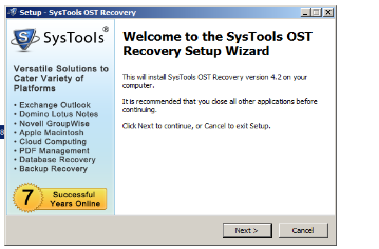
Just open the setup and run through the installation wizard.

11


Accept the license agreement.

22


Choose the installation directory.


33


Once the setup completes just open the OST recovery software.

44


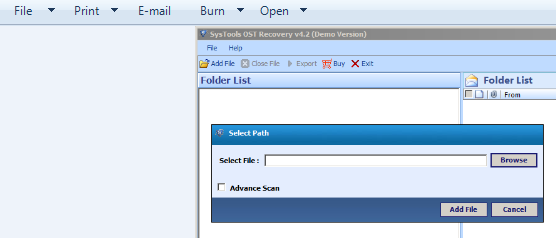
Browse and select the damaged OST file.


55


Once the OST file is selected it starts scanning the file as shown below.

66


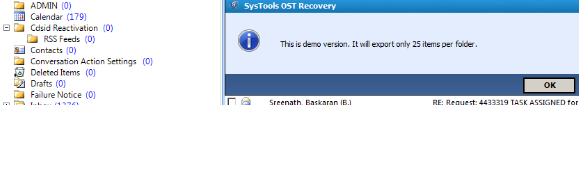
Once the scanning is completed it opens all the emails in outlook mode which are readable.Since its  a demo version it displays the below information.

We have an option to export emails one by one.

77


We have an option to export the emails in MSG format or into PST file.


88


Just Click on export and select the required format in  MSG or PST. After that we are done with the PST extract from the corrupted OST file.

Overall this tool can be useful for admins in few critical scenarios of recovering the OST files for  important mailboxes and its user friendly.

Cheers

Sathish Veerapandian
Technology  Evangelist


Installing Exchange 2013 Edge Server CU5

Edge server serves as a best security filtering system for all the incoming and outgoing emails  in our organization. It prevents spammers from exploring and hacking our network.

In real time edge servers will be placed in a DMZ zone.
So the setup will be looking like below
Intranet (Basically corporate LAN) – intranet firewall – DMZ – perimeter firewall –  Internet

So we should be placing the edge server’s right in between the intranet and perimeter firewall which is demilitarized zone.
Basically in this DMZ zone there wouldn’t be full access to the directory services because this DMZ zone acts as a first filtering agent for any kind of spam messages that are coming to the network.
We will have the DMZ be placed in a different sub-net apart from LAN sub-net for security reasons not to expose the LAN network to the spammers.So we use the concept of DNS suffix so that we would be able to communicate with the LAN network with minimal required access to few services.

With help of ADLDS installed on edge servers ,directory services would be able to provide dedicated required services for Edge server.Here the edge transport server uses the ADLDS services to store the recipient and configuration information alone.

By having this information it would be able to validate the authenticated valid users on its own domain, applying the required spam filtering agent settings for its recipients, knowing the connector configurations and routing the mail-flow accordingly.
Following are the prerequisites for installing Edge server
Remote Tools Administration Pack
ADLDS
Required Windows components – NET-Framework, ADLDS
Windows Management Framework 4.0
Follow below TechNet article to install Exchange 2013 edge server Prerequisites
http://technet.microsoft.com/en-us/library/bb691354(v=exchg.150).aspx


1. Configure DNS suffix on Edge server.
Add the edge server name along with the domain name as the DNS suffix.

In my-case im adding it as edge2013.exchangequery.com

2. Configure firewall rule as following:

Inbound traffic:
SMTP – TCP port 25 (from Internet)
SMTP – TCP port 25 (from Edge server to Hub server on internal network)
Outbound traffic:
SMTP – TCP/UDP port 25 (from Edge to Internet)
SMTP – TCP/UDP port 25 (from Hub to Edge server)
LDAP for Edge Sync – TCP port 50389 (from Mailbox to Edge server) Secure LDAP for Edge Sync – TCP port 50636 (from Mailbox to Edge server). Do not open these ports on perimeter firewall. These ports should be open only on intranet firewall.

Note:

If you are installing edge in lab setup you can follow the below steps
1) Bring edge server and do not join it in a domain.
2) Add the DNS suffix with the domain name alone.
3) Have edge server on a different subnet. But have these 2 subnets on the same VLAN.
4) Add one ip range of edge server in mailbox server as Additional in advance TCP/IP settings in the primary NIC. Similarly do the same for edge server. Add one ip range of mailbox server as Additional in advance TCP/IP settings in the primary NIC.
By doing this only you would be able to ping these 2 different sub-nets and they will have network connectivity.
In real time scenarios we have to ensure connectivity between perimeter n\w and LAN n\w and all the required ports open else we will be having trouble with the edge synchronization with the mailbox servers.


3. Install the Exchange 2013 Edge server

1


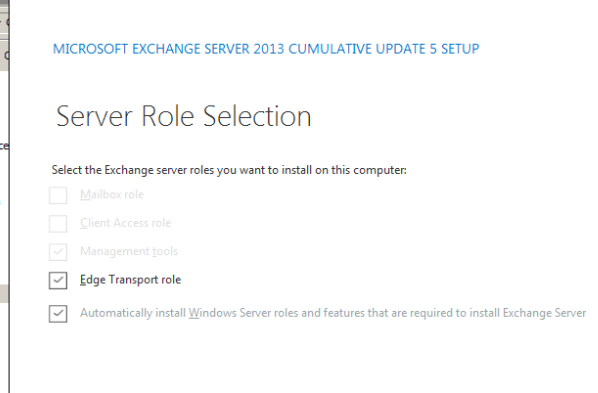
Select the edge transport role


2


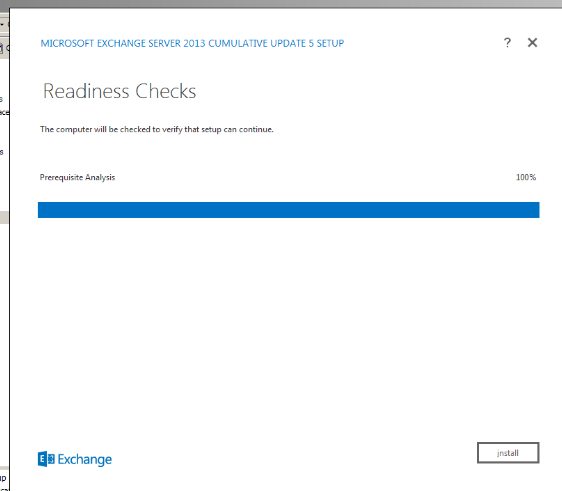
Wait for the readiness to be completed.

3


Reboot the computer once the setup completes successfully.
After the reboot ensure that the edge server is installed. From Exchange 2013 we do not have exchange 2013 management through GUI and it is from exchange management shell on the edge server itself.But after Edge-synchronization is completed we will be able to manage the edge server from EAC.

Run the following command to ensure that edge server is available.

Get-Transportservice
Also you can run Get-Transportservice | FL to check all other parameters as well.


5

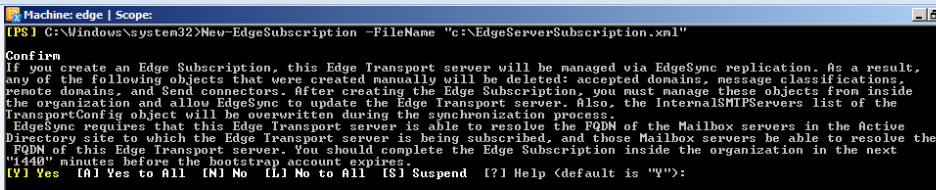
4. Start edge subscription by following command:

“New-EdgeSubscription –Filename “C:\edgeserversubscription.xml”


6


5. Copy the xml file to the mailbox server local disk.

6. Complete subscription by running the below command:

New-EdgeSubscription -FileData ([byte[]]$(Get-Content -Path “C:\EdgeServerSubscription.xml” -Encoding Byte -ReadCount 0)) -Site “Default-First-Site-Name”

7. Run Start-EdgeSynchronization

Now we need to Start-EdgeSynchronization cmdlet to immediately start synchronization of configuration data from Active Directory to the subscribed Edge Transport server.
Start-EdgeSynchronization -Server exchangequery.com

Once the synchronization is over the edge setup is completed successfully.
Cheers
Sathish Veerapandian
Technology Consultant  🙂

Office 365 and Exchange 2013 post migration testing plan

It is always better to have a set of testing plan to be done after we complete a major task.Office 365 being  a major preferred product in the current messaging trend most of the companies decide to have office 365 in their environment.

Most of the companies would like to have a coexistence kind of setup between existing exchange 2010/2013 servers  in on-premise and office 365.Few of them keep this kind of a hybrid setup for a while to experience the office 365 service and then they slowly get transitioned to office 365.Rest of them would like to continue with the coexistence hybrid setup of office 365 and exchange on premise together always.

Administrators and end users might not be aware if there are any functionality broken after the complete migration until we execute a post migration testing plan.

Below are the list of possible post migration testing that can be performed for a healthy hybrid O365 Exchange on premise coexistence.

1) Test Email from O365 Mailbox to On-Prem mailbox account.
2) Test Email from On-Prem mailbox account account to O365 Mailbox.
3) Test Email from O365 account to external Gmail/hotmail account.
4) Test Email from external Gmail/hotmail to O365 Mailbox.
5) Test Private Meeting from O365 Mailbox.
6) Test Private Meeting from On-Prem Mailbox to office 365 Mailbox.
7) Free Busy Information of O365 visible for On-prem Mailbox.
8) Free Busy Information of On-prem Mailbox visible for O365.
9) On-Prem Mailbox visible for O365 users in GAL.
10) O365 Mailbox Visible for On-Prem in GAL.
11) Accessing a shared calendar in On-Prem by O365 User.
12) Accessing a shared calendar in O365 by On-Prem User.
13) Test Email to O365 account from Iphone/Andriod device through activesync.
14) Test Email from O365 Account to Iphone/Andriod Device through activesync.
15) Mail Contacts of On Prem Visible for O365 and Vice Versa.
16) OOF of On Prem Account Visible for O365 and Vice Versa.
17) Mail Delay Delivery from O365 to On prem and Vice Versa.
18) Granting Delegate access for On-Prem Mailbox to O365 Mailbox and Vice Versa.
19) Send email to distribution list from O365 to On prem and Vice Versa.
20) Meeting Requests Forward from O365 to On-Prem and Vice Versa.
21) Setting up E-Fax Account creation for O365 Mailbox.
22) Application related Relay setup for O365 Mailboxes where the application resides in onpremise.
23) Email Encryption setup for O365 Mailboxes.
24) External OWA Setup(limitations if any) and testing for O365 Mailboxes.
25) Recover email from Recover Deleted Items Folder.

Also refer :

Post-deployment checklist for Office 365 –  http://technet.microsoft.com/en-us/library/hh852456.aspx

Cheers

Sathish Veerapandian

Technology Evangelist

Upgrade to Exchange 2013 CU5 in Graphical User Interface

Just tried installing Exchange 2013 CU5  and is pretty much easier  and went clean without any errors/warnings in my lab setup.

For the changes and fix that have been done in CU5 can be referred in my previous article

http://exchangequery.com/2014/05/28/microsoft-exchange-2013-cu5-released/

The setup can be downloaded from this location

http://www.microsoft.com/en-us/download/details.aspx?id=43103

As we are aware that the upgrade order from Exchange 2013  if we are using separate server for mailbox and cas then Microsoft recommends to upgrade the mailbox server first and then the cas server.

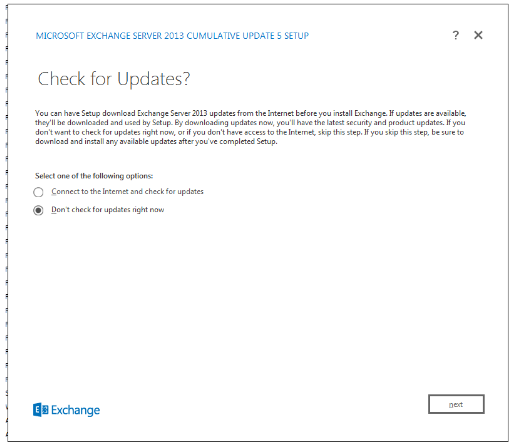
After the download is complete just open the setup file and it opens the below screen.Choose the required option its always recommended to check for updates and then click on next.


Image


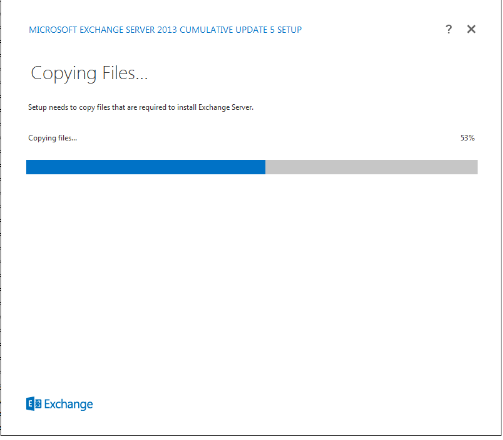
The setup starts copying files .

Image


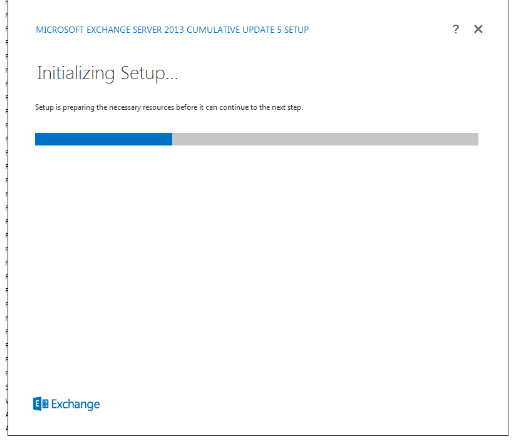
And then initializes the setup as below.


Image


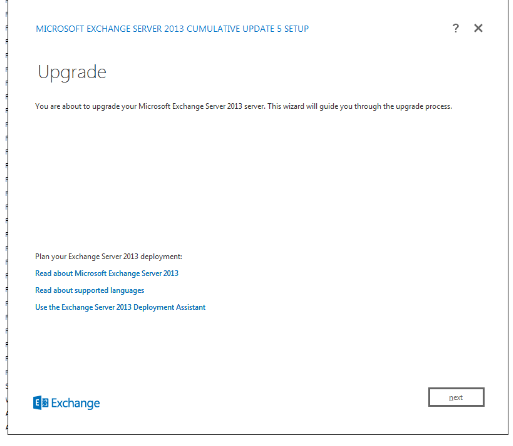
Finally it brings the upgrade option and just click on upgrade

Image


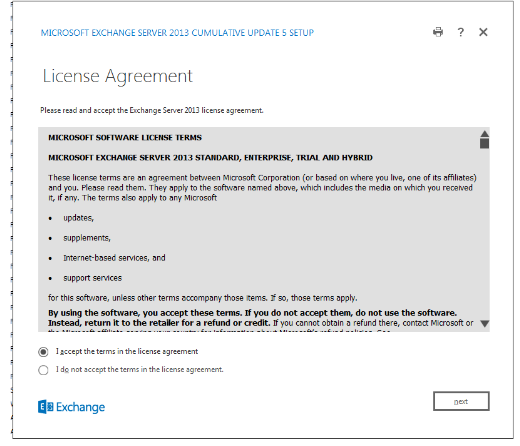
Click on accept in the license agreement and proceed with the installation.

Image


Now the setup goes through the prerequisites analysis

Image


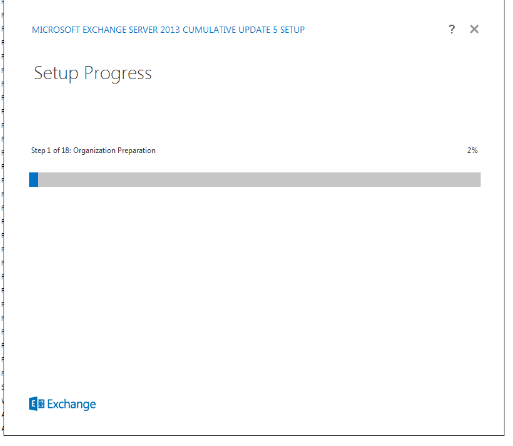
The setup starts once the prerequisites is completed.It goes through 18 steps as below for organization preparation.

Image


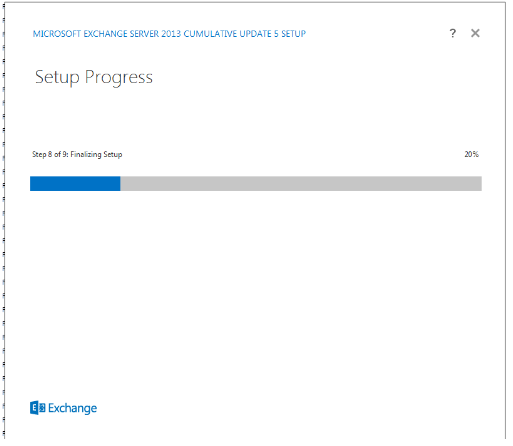
And then the installation continues  in 9 steps and completes the installation as below.Image


Just reboot the servers after the installation is complete.

We can now notice the new service Microsoft Exchange Shared cache service is installed on the server.


Image


For unattended installation/upgrade you can refer the below technet article.

http://technet.microsoft.com/en-us/library/aa997281(v=exchg.150).aspx

Cheers

Sathish Veerapandian
Technology Evangelist


Script for Conference Room Conversion

We often receive a request in daily job in messaging environment with regards to conference room. We might receive a request to convert an existing conference room from auto accept to delegate and vice versa.

It could be easier if there is a script to change the room type for these kind of bulk requests . Below script can be used for converting the conference room types. The Script configures conference rooms for Auto Accept or delegate configuration according to the input given.

You can use the below script for conference room conversion

***********************************************************************

<#

.SYNOPSIS

SetConferenceRoom.ps1 configures conference rooms for AutoAccept or delegate configuration.


.DESCRIPTION

Rooms are configured as AutoAccept room or delegate room using the parameters defined below. Both types are converted to the RoomMailbox recipient type if they are not already. This is a one-way operation.


If configured as an AutoAccept room, no resource delegates are set and the AllBookIn and AllRequestIn policies are left at true with AutoAccept processing turned on.


If configured as a delegate room, the AllBookIn policy is set to false. At least one delegate must be supplied in the syntax described below, and will be configured on the room. Delegates can be added to rooms as part of this script, and delegates cannot be removed. It will only take the existing delegate list and add to it.


.PARAMETER Room

The CDSID, DN or LegacyDN of the room to configure. Quote if necessary.


.PARAMETER AutoAccept

Boolean parameter to define whether AutoAccept is on or off. If set to $true, then -Delegates must not be used.


.PARAMETER Delegates

An array of delegates to add to the room. Specify multiple delegates using a comma, and quote individual delegates.


.INPUTS

None – no pipeline input.


.OUTPUTS

System.String.


.EXAMPLE

C:\PS>.\SetConferenceRoom.ps1 -Room NARoom100 -AutoAccept:$true

Room is configured as a RoomMailbox if not already, and all AutoAccept settings are configured. Delegates are not configured.


.EXAMPLE

C:\PS>.\SetConferenceRoom.ps1 -Room NARoom100 -AutoAccept:$false -Delegates userid1

Room is configured as a RoomMailbox if not alreayd, and all delegate settings are configured. Delegate userid1 is added to the existing list, empty or not.


.EXAMPLE

C:\PS>.\SetConferenceRoom.ps1 -Room NARoom100 -AutoAccept:$false -Delegates “userid1″,”userid2”

Room is configured as a RoomMailbox if not alreayd, and all delegate settings are configured. Delegates userid1 and userid2 are added to the existing list, empty or not.


.LINK

Insert script documentation link here.

#>

Param([string]$Room,[bool]$AutoAccept = $false,[Array]$Delegates = $null)


if (($AutoAccept -eq $false) -and ($Delegates -eq $null))

{

write-host “Cannot configure room as a delegate room without a delegate list. Please see ‘help .\SetConferenceRoom.ps1 -detailed’ for more information.”

exit

}

if (($AutoAccept -eq $true) -and ($Delegates -ne $null))

{

write-host “Cannot configure room as an AutoAccept room WITH delegates. Please see ‘help .\SetConferenceRoom.ps1 -detailed’ for more information.”

exit

}

try

{

write-host (“`r`nValidating mailbox `”$room`”…”) -ForegroundColor white

$d = Get-mailbox $Room -erroraction Stop

}

Catch

{

write-host (“`r`nCannot find mailbox `”$room`”. Reason: ” + $Error[0]) -ForegroundColor white

write-host `r`n”Exiting…”

exit

}

$RecType = (get-mailbox $room).RecipientTypeDetails.ToString()

write-host “`r`nConverting $room to recipient type RoomMailbox…” -ForegroundColor white

if ($RecType -ne “RoomMailbox”)

{

$answer = read-host -Prompt “`r`nRoom About to convert $room to object type Room from $RecType. This is required in order to configure the conference room. Do you wish to continue? (y/n)”

if ($answer.ToString().Tolower() -eq “y”)

{

set-mailbox $room -type Room

write-host “`r`nConfigured $room as recipient type RoomMailbox.”

}

else

{

write-host “`r`nOperation aborted. No longer processing room conversion.”

}

}

else

{

write-host “$room is already of type RoomMailbox. Skipping conversion…”

}

if ($AutoAccept -eq $true)

{

write-host “`r`nChecking room for existing delegates…” -ForegroundColor white

$currentdelegates = @()

$currentdelegates += (get-calendarprocessing $room).resourcedelegates

if ($currentdelegates.Count -gt 0)

{

write-host “`r`n$Room has the following delegates:”

$currentdelegates |select name

write-host “`r`nThese delegates should be cleared if the room is to be configured as AutoAccept.”

$answer = Read-Host “Do you wish to clear these delegates from the room? (y/n)”

if ($answer.tostring().tolower() -eq “y”)

{

set-calendarprocessing $Room -ResourceDelegates $null

write-host “Cleared delegates on $room.”

}

else

{

write-host “Not clearing delegates on $room.”

}

}

else

{

write-host “`r`n$Room has no existing delegates. Skipping warnings…”

}

write-host “`r`nConfiguring calendar processing on $room…” -ForegroundColor white

set-calendarprocessing $room -TentativePendingApproval:$true -OrganizerInfo:$false -additionalresponse “This meeting had the Subject, Comments and Attachments removed. This meeting is not public and should be treated as private.” -AddNewRequestsTentatively:$false -AutomateProcessing AutoAccept -BookingWindowInDays 365 -ForwardRequestsToDelegates:$false -AddOrganizerToSubject:$false -AddAdditionalResponse:$true -AllRequestInPolicy:$true -AllBookInPolicy:$true

write-host “`r`nConfigured calendar processing on $room for standard AutoAccept configuration.”

}

else

{

write-host “`r`nSetting delegate configuration on $room…” -ForegroundColor white

$currentdelegates = @()

$currentdelegates += (get-calendarprocessing $room).resourcedelegates

if ($currentdelegates.count -gt 0)

{

write-host “`r`n$room currently has these delegates:”

$currentdelegates |select Name

write-host “`r`nThe following delegates will replace the existing list:”

$delegates

$answer = read-host -prompt “`r`nIf you do not wish to proceed, delegates will not be added but proocessing options will still be confgured as a delegate room. Delegates can be added later. `r`nAlso, if there are any users in the list of additions that are already delegates, do not proceed and remove the duplicates from the list. `r`nDo you wish to proceed? (y/n)”

if ($answer.ToString().ToLower() -eq “y”)

{

Set-CalendarProcessing $room -ResourceDelegates $null

set-calendarprocessing $room -resourcedelegates $delegates

write-host “Delegates configured. These may not appear in the properties of $room for a few minutes.”

}

else

{

write-host “Skipping delegate configuration.”

}

}

else

{

write-host “`r`n$Room currently has no delegates. Adding these:”

$delegates

set-calendarprocessing $room -resourcedelegates $delegates

write-host “Delegates configured.”

}

write-host “`r`nConfiguring calendar processing on $room..” -ForegroundColor white

set-calendarprocessing $room -TentativePendingApproval:$true -OrganizerInfo:$false -additionalresponse “This meeting had the Subject, Comments and Attachments removed. This meeting is not public and should be treated as private.” -AddNewRequestsTentatively:$false -AllBookInPolicy:$false -AllRequestInPolicy:$true -AutomateProcessing AutoAccept -BookingWindowInDays 365 -ForwardRequestsToDelegates:$true  -AddOrganizerToSubject:$false -AddAdditionalResponse:$true

write-host “`r`nConfigured calendar processing on $room for standard delegate configuration.”

}

write-host “`r`n$room configuration complete.`r`n” -ForegroundColor white

***********************************************************************

Just download the script and navigate to the location through EMS

Run the below command to make it to delegate  type

.\conf.ps1 –Room   “roommbx” –AutoAccept:$false –Delegates “specify delegates”

Image

This script can be used to change the delegate of the conference room as well

Image

For auto accept

The below output is for autoaccept

Image


Cheers

Sathish Veerapandian
Technology Evangelist

Microsoft Exchange 2013 CU5 Released

Microsoft has finally released Exchange 2013 CU5

The main Enhancements in CU5 are

1) Introduction of New service – Microsoft Exchange shared Cache Service.

The Microsoft Exchange Shared Cache Service is a new service that is added to Exchange Server 2013 Cumulative Update 5 to meet future needs of the product.

It improves System Performance through Caching few system Information.Currently this service is not been used as of now. It the readiness for enabling this functionality it the future Cumulative updates.

Note : We might be experiencing some probe config in Managed Availability frequently restarting this service Microsoft Exchange Shared Cache Service after CU5 upgrade because this service is yet to be fully functional.

Inorder to fix this Microsoft has published a Windows PowerShell script that you can use to disable the probes to prevent the Exchange Shared Cache service from restarting.More information is available in KB2971467.

2) Improvements in Managing OAB for Multi site Environments which was already mentioned by Ross Smith IV on the Exchange Team blog.
3) New options in the Hybrid Configuration Wizard
It has an option My Office 365 Organization is hosted by 21viaNet.

For more information about HCW read Micheal’s Blog – http://vanhybrid.com/2014/05/27/new-hybrid-configuration-wizard-features-in-exchange-2013-cu5/
Read more information about Cu5 in Exchange Team Blog – http://blogs.technet.com/b/exchange/archive/2014/05/27/released-exchange-server-2013-cumulative-update-5.aspx
You can look more detailed information about CU5in Tony Redmond’s blog as well – http://windowsitpro.com/blog/exchange-2013-cu5-a-good-update

Cheers

🙂

Sathish Veerapandian
 

Overview about Efax and Brightfax functionality

What is Efax?

EFax® is a service that allows us to send and receive faxes using the Internet rather than a phone line. EFax® is easy to use, but it is different than a typical phone-based fax machine.

Bright fax is one of the EFax type.Bright fax is one of  the best EFax type currently in the industry and they are providing excellent service to their customers. In this article we will be looking at Bright Fax Functionality and its features .

What is Bright FAX?

Bright Fax is a service provided by CRC.CRC has been providing fax-to-email and email-to-fax services for years. This service allows users not only to send and receive faxes through their email account, but adds ability to send and receive from anywhere, and to search, print, sort and view faxes from any web browser and it allows users to send fax from any  applications (ex:Word,Outlook). Bright FAX acts as a print driver for all of the applications installed in PC.

The whole solution is hosted with CRC. There is no software or hardware to use Bright Fax. So there is no software, no hardware and no maintenance required from our Environment.

By using this we can create a user profile in bright fax for users who wish to send and receive faxes through their email accounts. This basically streamlines and automates the incoming and outgoing faxes in an organization. This can be used for sending out multiple copies of reports as fax to the partners in an organization.

Also we have a self-service administrative portal which lets admins to track all the incoming and outgoing faxes in an organization. And we can filter out our search option by group, users and recipients as well. We can also take print out of any one of the copy that was sent earlier.

In order to setup bright fax account for a user mailbox the below things are mandatory.

1)      The company needs to have subscription with bright fax since the whole setup is hosted with bright fax.

2)      We need to have a fax  number associated with the user email address so that users can send and receive fax to those email ID’s.

Note:

Initially we will be getting a list of Toll Free Numbers created for respective regions by the ETAC Team (by Bright Fax Team Admins) for each department. We can assign any one of these numbers one by one for the account that we are creating in Bright Fax.

Even the Fax numbers can be specifically chosen by user by not selecting the Toll free numbers that we are getting from Bright Fax. But the configuration will be little bit complicated since it needs to be integrated with associated service provider which is done by ETAC Team (Bright Fax Team Admins).

Basically we have 3 types of administrators to handle bright fax accounts.

Department Administrators:

  • They can Create/Edit users and request bright fax numbers for new users.

Company Administrators:

  • Create/Edit department administrators and assign departments.
  • View active and inactive users and administrators.
  • Import an excel spreadsheet of new users to be added.
  • Move users from one department to another.
  • View SLA, Live Statistics, Inbound and Outbound History reports.

ETAC Administrators:

  • Have all the privileges of Department and Company Administrators and they are Admins from Bright Fax Team.
  • Create/Edit new customers (or companies).
  • Create Company administrators for a customer (or company).
  • Assign bright-fax numbers to a customer (or company).

We will be assigned into department admins or company admins (mostly it should be company admins) with which we can perform ETAC account creation.

Now we will look in how to create a Bright Fax account for a user

1)  Logon to the Site http://portal.mfax.net/Mailfax/Login.aspx   with the Administrator user name and password (this will be the url for everyone  since the whole setup is hosted with bright fax).


Image


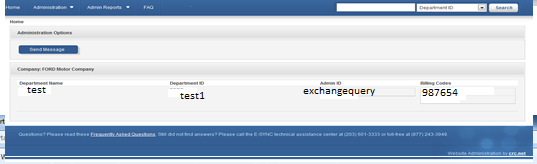
Once we have logged in we get a below screen. We have an option to choose department ID and option to send message to users. It shows the Department name,

Department ID, Admin ID and billing codes.We have admin reports option as well.


Image


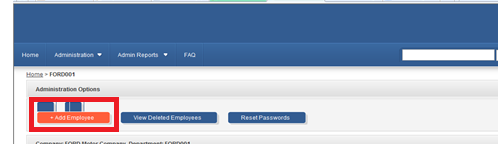
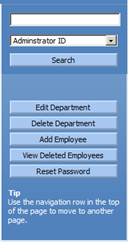
Now click on the department name. It will take you to the below screen which has Add employee. We have an option to view the deleted employees as well as to reset the passwords as well.


Image


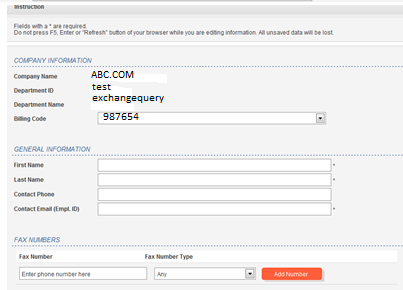
Leave the Billing Code field blank and enter the rest of the information as per the details in Global Address book.


Image


Ensure that you give the correct email address and Phone number of the associate.

Under the Fax Server Information, for the Profile field:  Select the BasicPDFConfirm option from the drop-down list you have other options to select as well.

Click Add Toll Free Number. Once the toll free number is generated copy it for further communication to the user.
Communicate all relevant information including the toll free number to the end user


Image


We have additional options to search for specific fax that was sent ,edit, delete department ,add ,view deleted employees and reset password as well as shown below.


Image


We are done in creating the bright fax account for the user.

Now let’s see how to send a fax from Outlook 2010 to a user who has fax number and machine configured for his ID.

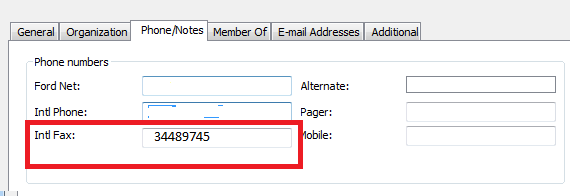
First we need to look for the user‘s fax number that he has been assigned. We can simply look this in the phone/notes tab in outlook address book by finding his contact as below.


Image


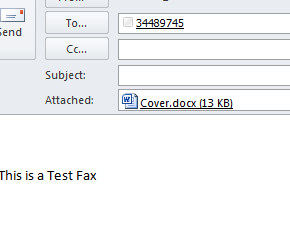
Open a new e-mail message in Outlook and address it.

The fax is addressed using the To.line of the email message.

Simply type [fax: 8 followed by the fax number].


Image


Attach the document that you wish you send as a fax and click send.

You will receive a notification as well whether the fax is delivered or not.

Cheers 🙂

Sathish Veerapandian
Technology Evangelist