Author Archives: Sathish Veerapandian

Content Index and search in Exchange 2016

In this article we will have a look at content index in Exchange 2016 and its improvements

A Small background functionality of how Indexing works in the background:

Index will contain all the search data for database and its copies. This will create a search data for all the mailboxes in that database.This data will be stored in a GUID on corresponding databases on the same location in a folder  and has sub-folders in it.This will help all end users search query from their mailbox.

So basically this will be like an index for a book where we usually look for the subject page location and navigate to the right page. This index functionality is also similar where it looks for the specific email based on the executed search query from the users and returns the appropriate results.

Exchange 2016 uses the same Fast Search index which was introduced from Exchange 2013.

We can see that corresponding file FastSearchIndex as well in the below location on indexing folder in Exchange 2016 as well..
CIII2

So how does the indexing functionality work with Fast Search Index ?

This fast search index has two core components :

CTS – Content Transformation Service:

This service is responsible for performing the actual background work . When the search query reaches here it actually filters the request and performs the search content analysis with  dictionary matches, keyword matches and parsing data with regular expressions. These all  of them are preloaded registered filters on Exchange 2016 Mailbox Server. From Exchange 2016 this parsing retry logic and search result cap have increased from 30 to 250 search refiners which will give a better  search results.

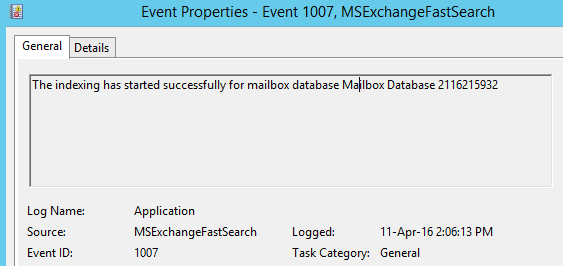
As soon as the search process with this CTS reaches the corresponding database store where the mailbox resides that’s when the below event ID gets created.

CCC

IMS – Interaction Management Service:

This component receives the prepared search results from CMS service processes and then sends the search results back to the user.

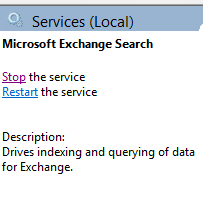
The corresponding service which is responsible for these components is Microsoft Exchange Search.

actual

Rest of the content index operators statistics remains the same as Exchange 2013

C1

What happens when you rebuild an index ?

Usually we don’t require to rebuild the index until the database and copies goes in inconsistent state which is very very rare case in a well planned deployment. But when index is rebuilt Exchange will create a clone copy of the existing database and will use this copy to rebuild the index from the scratch.This will take lot of time to rebuild the index and will consume cpu ,memory and disk .

Search Enhancements and improvements from Exchange 2016:

In earlier versions of Exchange these passive database  copies index will be updated from the active copies.This will  consume more resources CPU time , memory and also disk space 10 to 20 percent.

From Exchange 2016 the indexing of passive copies is done on the passive itself rather than getting it from active copies. This will definitely reduce the utilization of the system resources and network which is very good.

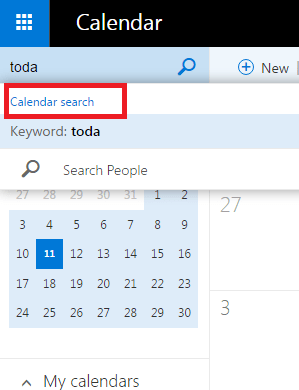
Calendar search which is available only from Outlook Web App at the moment.

actual2


Enhanced server power search and hand off to the end user is available for all Outlook 2016 clients.

Which means from Exchange 2016 with Outlook 2016 client end users will not get this below screen with option “find more on the server”  anymore

actual2

By having this as a default search index from  Outlook 2016 client this will seamlessly search on the local cache(ost) ,Exchange 2016 computer and provide better results in the first search itself. Important point to note is that the client computer needs  an internet connection to have the server side search .

The good thing is that after configuring  outlook profile  for a user having huge mailbox size  on a new laptop the help desk team no longer needs to wait for the local OST file to be cached and indexed since the server side search is attempted on the first try itself.

When  offline, still the search will be performed against the Windows Search Index on the computer.

Based on my experience with the enhanced search from Exchange 2016 is really faster and returns appropriate results with outlook 2016 client.

Thanks  & Regards 

Sathish Veerapandian 

MVP – Office Servers & Services 

Skype for Business leave messages offline

From build 16.0.3331.1000 Skype for Business client 2016 there is an option to send IM to people who are offline. When the users sign in to the Desktop  client all the missed IM conversations will be notified.

We need to follow the below steps to enable this feature for all users.

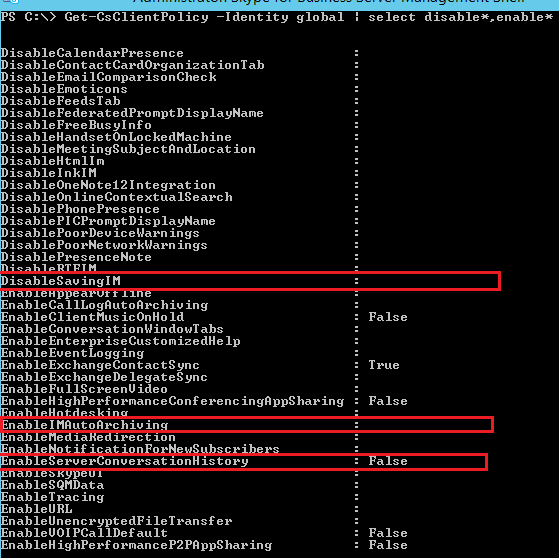
Basically we require 2 parameters that needs to be enabled on the client policy in order for this feature to work.

EnableIMAutoArchiving

DisableSavingIM

By default this value will be set to null with no values as below.

SFB.png

The default option is set to null which means it will save the conversation history locally on the PC and mobile devices and not on the server side unless the option EnableServerConversationHistory value is set to True.

We have 3 options to set:

1) DisableSavingIM value to Null 

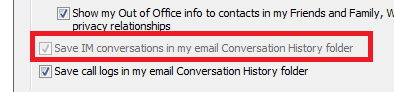
When set end users will have the option either to select or uncheck the option save IM conversations in my email conversation history folder.

2) DisableSavingIM  value to True 

When set end users will not have the option either to select or uncheck the option save IM conversations in my email conversation history folder. The option will be greyed out.

SFB

3) DisableSavingIM value to False 

Setting this value will not

In-order for this feature to work we need to set this value to True  since with the null option and false  it will not work.

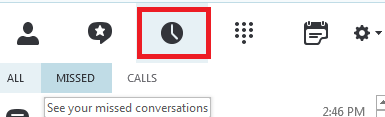
post enabling this end users will get this notifications icon on the Skype for business 2016 client.

SFB2.png


If the exchange server integration is enabled for archiving then all these archiving data will be stored on the associated user Exchange Mailbox.

The versions of exchange it supports to integrate the oauth setup is from Exchange 2013 and Exchange 2016 or Exchange Online.
If the version of exchange is 2010 then we do not have this option to store this archiving data on the Exchange.
In this scenario the data will be stored in the Archiving SQL server database.

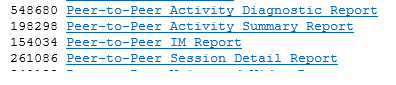
Below sample Dashboard report shows about IM information contained in the archiving database for IM stored on Archiving SQL database.

11

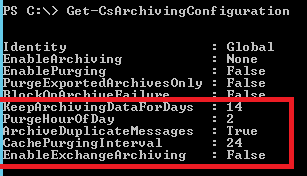
If we have the server side enabled on the Archiving SQL DB its very important we need to look for two values

Test

CachePurging Interval

The system will look for the participants who doesn’t have archive enabled and for them the transcript will be deleted from the database.

Keep Archiving data

By setting this value the system will have only the logs of specified value and purge other records which are older than the specified value.

If in case the data is stored on the Exchange mailbox then we need to make sure a retention policy with the retention tag corresponding to this folder is created which will not increase the Mailbox Quota for end users.

Below are the limitations of this sending Offline IM  feature at this moment:

  1. This feature available only for peer to peer Instant messages at this moment.
  2. This feature is not available for users sending IM to offline persons through mobile devices.
  3. The IM (senders) should be sent from a desktop/laptop thick client. Microsoft might extend this feature to all the clients in future.

Thanks & Regards

Sathish Veerapandian

MVP – Office Servers & Services

Error occured while establishing a connection to the SQL server

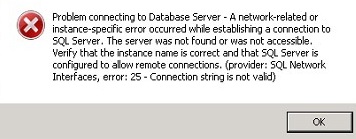
Recently in one of our application while trying to configure  reporting services configuration we were getting the below error while trying to connect to a SQL database.

IMG2

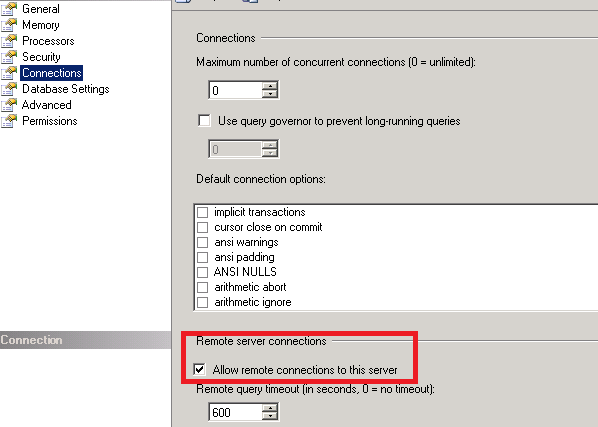
Checked the remote server connections for the database and it was enabled

SQL4


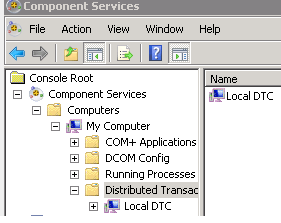
Went into the component services and checked the local DTC connection


Test3331

Network DTC access was disabled and hence the issue.

IMG-1.jpg

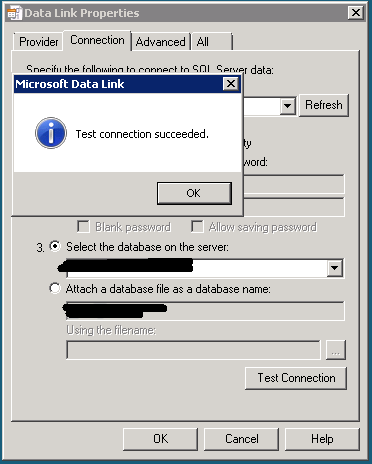
Enabled them and after MS DTC service restart checked UDL connection for the affected database on that instance.

Final

In addition to the above we can also check the execution account permission on the SQL database server.

This can also happen if the SQL service state is not running.

Make sure SQL Server service status is Running.
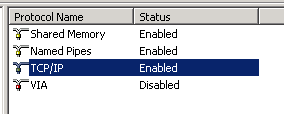
Also make sure the TCP/IP communication is enabled on the SQL server configuration manager on the instance where the problematic DB exists

final2

By default SQL Server runs on port 1433, if the default port is changed then these new ports should be added in the firewall exceptions.

You can also check the connectivity to the SQL Server by the below commands

netstat -ano| findstr 1433

You should get a successful  TCP listening establishment on the SQL server IP address and on port 1433 .

Hope this helps

Thanks & Regards 

Sathish Veerapandian 

MVP – Office Servers & Services

Exchange 2016 Migration planning on phases

When it comes to migration we always need to plan properly before we start the actual project.Study on the the existing messaging environment as a whole and deriving  a detailed analysis is much required.
Study in terms of existing storage, current number of active users,mailbox traffic utilization , load on the exchange servers, email relay on the servers ,email security setup and messaging related components.

This will really help in understanding the current requirement for email platform and therefore we can scale-up the new environment in a healthy way.
Also by doing this study and implementing the new setup can run for another 5 years without any hassles.

In this article we will have a look at some steps which will help in doing an exchange migration in phases for a smooth and successful migration.

Phase 1: Analyzing existing environment :

I have segregated few core components in this phase that can help for better migration.

a) Email Traffic

Analyze the current email traffic flow of the whole environment in terms of monthly, weekly and daily email traffic.
Better to collect 3 sets of data on the above and get the average value on them.
By doing this we can actually plan very well for the new migration in terms of storage and network bandwidth.

b) Active Users

Determine the current number of active users in the environment . If there are mailbox statistics which have been collected on monthly basis in exchange reports it will be better.

By seeing this we can actually analyse the mailbox growth on a monthly basis. This will help us to calculate to some better value in terms of mailbox growth for the organization in the future.

c) Mailbox Growth & Quota

Again analyzing the Mailbox statistics report will give a better result to calculate the mailbox growth of individual users for the next 3 years. We need to calculate them based on the current growth from the time current exchange version is running and depending upon the nature of email traffic. Better to have an overhead value of 50 percent more which will run for a long time without any bottleneck.

Phase 2: Preferred Architecture

Physical:(Recommended)

Microsoft recommends to have the Exchange servers to be running on physical VM. Since their new architecture is a very good approach which does not require a  very high configuration server ,because they say for future requirement perform a scale out and not scale up( which means bring up an additional mailbox server in future when required and do not scale up the hardware in the initial configuration) which perfectly makes sense.

In any case the Exchange 2016 Calculator needs to be used first to derive the values of your requirement.

Exchange 2016 Calculator

So if you are planning for a physical servers all we need is  a decent server with below configurations minimum.

You can use Commodity server platforms as the PA with the below minimum configuration.

1) 2U, dual socket servers (20-24 cores) according to your requirement choose the cores.
2) Maximum 96GB of memory according to your requirement choose the memory.
3) battery-backed write cache controller
4) 12 or more large form factor drive bays within the server chassis
5) Probably the server with DAS storage.

Virtual (Vmware or Hyper-V):

Though Microsoft recommends the PA to be on the physical server but still the environments running on VMware , Hyper-V have no options if they continue the new provisioning on the VM.

But still if VM is the plan below are the recommendations for  VMWARE:

1) Each new provisioned Mailbox/Edge Server  should have a reserved memory.Exchange Server 2016 calculator results are driven by the expected amount of loads that will be generated based on the actual inputs.

2) Microsoft supports up to 2:1 virtual-to-physical CPU allocation for Exchange Server 2016 in a virtual environment. VMware recommends to leave the cores per socket count at one at all times

3) Storage can be Fiber Channel, iSCSI, and network-attached storage (NAS) shared-storage protocols.

An Example below of how storage can be provisioned for Exchange 2016 VM.

We can use any one of the option Data Stores virtual disks  or RDM Raw Device mappings.


Storage
VMware recommends that you set up a minimum of four paths from an ESXi host to a storage array. To accomplish this, the host requires at least two host bus adapter (HBA) ports.

VMFS supports RDM . This  allows a virtual machine to directly access a volume on the physical storage subsystem through Fiber Channel or iSCSI.

The decision to use VMFS or RDM is not dependent on Exchange .So its better to check the backup to ensure it supports the above configuration.

New Improvements in Exchange 2016 have made Exchange 2016 Lower Storage I/O than earlier versions.
But still with a careless planning on storage especially for Exchange will result in a Poor Exchange infrastructure. Concentration on this part is very much required and we need to spend more time on this before building the setup.

4) Network Considerations

Vmware Recommends to use the VMXNET3 network adapter – This  provides better data transmission  with reduced CPU utilization. Better to have single network per site.

From Exchange 2016 since the data is replicated on one network all we need is one NIC card with the above configuration.

Also have Layer 7 load balancing with no session affinity. Also decide your network link and network link latency based on your previous calculated value from the phase 1.

Phase 3: Verify the Exchange Dependent Components Compatibility

After completing the two phases now we need to check the support compatibility of Exchange dependent components.

Below are most of the dependent components

1)   Check your current backup with Exchange and see if it supports Exchange 2016.

2) Check for any Transport categorizer  level Third party software’s compatibility. It can be any Antispam , Antivirus , Signature solutions etc …,

3) Check with existing journaling solution and its compatibility.

4) Check with  existing Archive solution if there is any and see their compatibility.

5) Check with MDM solutions  and its compatibility. There is no more MAPI/CDO support from Exchange 2016 . So you need to make sure that all MAPI/CDO components are retired.

6) Check the current Monitoring solution for Exchange and see if it supports Monitoring Exchange 2016 integration.

Phase 4: Data Center Design 

a) Active Active site : We can go with this option if we have a well connected round trip network latency. By using this option we are utilizing both the sites efficiently. If the data-centers are connected and having a good redundant paths we can choose this option.

b) Active Passive site : Active Passive option is also good but the only part is the DR resources will not be utilized most of the time unless and until there is some issues with the main site unavailability.

For any of the above configuration the preferred architecture is each of the data center should have its own Active Directory Sites.

This is because Safety Net and Shadow Redundancy will work  only when the DAG members are spanned across more than one Active Directory sites.

Phase 5: Deploy & Test the performance

Once above all factors are considered we can go ahead and deploy the Exchange 2016 as per the plan .

In this phase better not to join the servers to the existing infrastructure. We actually need to see if the provisioned servers, storage , networks are strong enough to handle the real load on them.

For that its better to create a dummy domain , not join them on existing domain and test the performance of the provisioned servers by using Exchange Load Generator and Exchange Jet Stress Analyzer.


To check the performance of the disk we can use JetStress Analyzer

Exchange Jet Stress Analyzer

To simulate the end users load we can use Exchange Load Gen Analyzer

Exchange Load Gen Analyzer

Once the loads and performance are tested on the newly provisioned servers we can go ahead and start the coexistence migration.

In the next blog we will discuss on coexistence migration phase.

Hope this helps

Thanks & Regards

Sathish Veerapandian

MVP – Office Servers & Services

Mailbox move from Exchange 2010 to 2016 might stall with the message move status RelinquishedWlmStall

Recently on one of our migration from Exchange 2010 to 2016 we were unable to move the mailboxes from Exchange 2010 and 2016.

It was giving us the below error and the move request was not progressing

P12

Not sure what was the reason behind this but Below are the possible work around :

 
1) First preferred option is we can submit the new move requests by modifying the Priority to emergency or highest by running the below command.
New-MoveRequest -Identity Mailbox -TargetDatabase “DB Name” -BatchName Test -Priority Highest

There is an option of modifying the workload type of MRS as a whole from Exchange 2016.
But this parameter is reserved only for Microsoft at the moment.
This is because not to change the workload parameter for the move requests since the other operations might be affected and might run out of resources.
Its better to use the above command only which will bypass the WLM throttling and will not disturb the other system operations.
Anyways we do not have an to option to specify this parameter at this moment and as per my view this is good based on the previous line.

2) As a workaround for the ReLinguishedWlmStall Status we can also temporarily change the following registry key:

Change “MRS” value in the Exchange 2016 server

Navigate to  [HKEY_LOCAL_MACHINE\SYSTEM\CurrentControlSet\services\MSExchange ResourceHealth] and set the value to 0 on the 2016 server.
Then restart the Mailbox Replication service.
Now try the move requests

 
3) Also you can create a new management override temporarily until the migration completes by running the below command. But keep this as a last option.

Get-ExchangeServer | ?{$_.AdminDisplayVersion -like “*15*”} | ForEach {New-SettingOverride -Component “WorkloadManagement” -Name “$_ MRS Override” -Server $_.Name -Section MailboxReplicationService -Reason “move request temp” –
Parameters Classification=Urgent -MinVersion 15.0}

Usually they say that this issue might occur if there are any performance issues experienced on the server.
But in my case there was no performance issue experienced by exchange 2016 server.
IMP Note:

These all changes must be done carefully on production environment after careful analysis and investigation.
There are few chances that the other operations might be affected on changing the Work Load Management option.
Keep an eye of the system resources during this process and Make sure that you revert back all the settings once the migration is completed.

If you want to know more on Work load Management there is an excellent write up by MVP Ratish – http://msexchangeguru.com/2015/02/23/exchange-workload-management/

Thanks & Regards

Sathish Veerapandian 

MVP – Office Servers & Services

CodeTwo Exchange Cross Forest Migration

Mailbox Migration in cross forest scenarios is always been a difficult , challenging and will  definitely vary according to the environment, scenario and requirement basis.

In this article i would like to explain the cross forest migration scenarios using the code two exchange migration tool.

In this example we are trying to migrate the mailbox from source different forest to target different forest using the CodeTwo migration tool.

The source will be Exchange 2010 SP3 and the Target will be Exchange 2013 CU10

Lets see the prerequisites before we start this migration job:

Code two says only network and EWS connectivity is enough. But its better to have all these below things in place before starting the migration so that migration can be completed in the provided timeline.

1.Prepare a healthy network link speed for this migration from source to target.

2.Make sure All the required ports/connectivity are open between source Exchange   server\DCs to Target Exchange 2013/and DCs
3.Create a DNS name resolution in source as well as target using conditional forwarders        or by using dummy zones

4.Create AD trust between domains Source and target (Not Mandatory required only if you need to migrate Group)
5. Add the Target domain admin in the built in admin group of source domain.

6. Make sure the MRS proxy is enabled for cross forest move in the target or source domain according to your requirement pull or push
Set-WebServicesVirtualDirectory -Identity “Exch1.fabrikam.com\ews (default web site)” -MRSProxyEnabled $true

Perform the above action depending on the mailbox move you are going to Trigger.

7.Change the autodiscover SRV DNS record to point to Target domain

Once the above prerequisites are set in-place we have to download the software and install them

The setup is normal just need to install with the default settings. You need to install the software where the connectivity is reachable for the EWS .

Note:

a) You can install the CodeTwo setup either on the source forest or on the target based on your requirement.( Push migration or Pull Migration)

b) You should to be able to reach the EWS url of the target domain from the server where you are installing them.

Better to install them on the CAS server where you can reach the EWS of the other domain if  all the prerequisites are set in place.

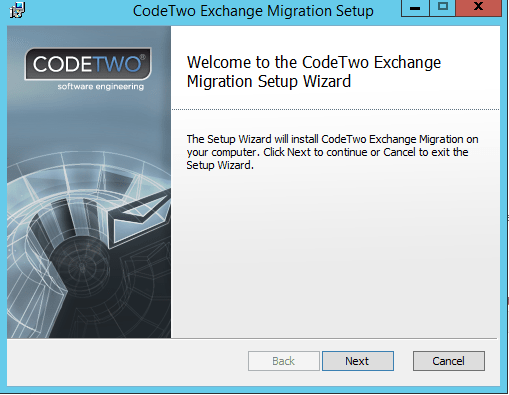
You will get the welcome screen as below

c1.png

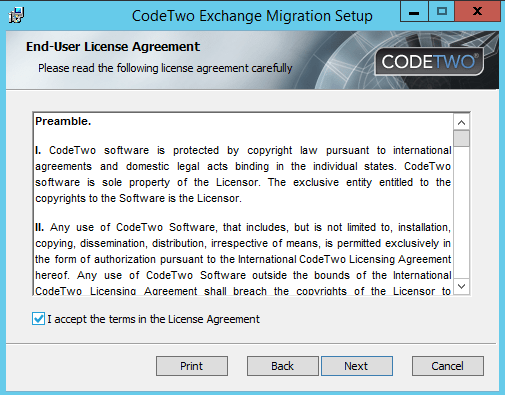
You will run through a normal installation as below

C2.png

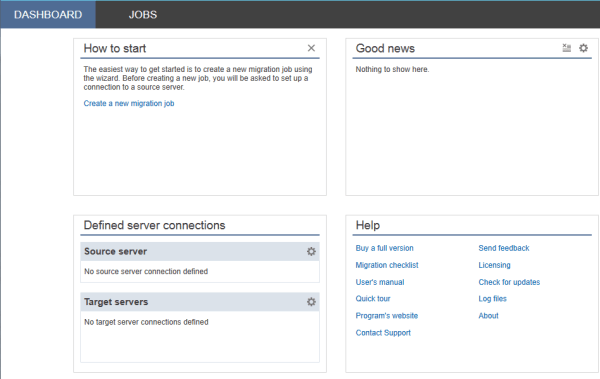
On a successful completion of the installation you will get a below GUI


Code3

Now we need to configure the source and the Target domains in the setup

Inorder to perform that do the following steps

Configure the below settings as source where you have installed this application

Go to server connections and select source server

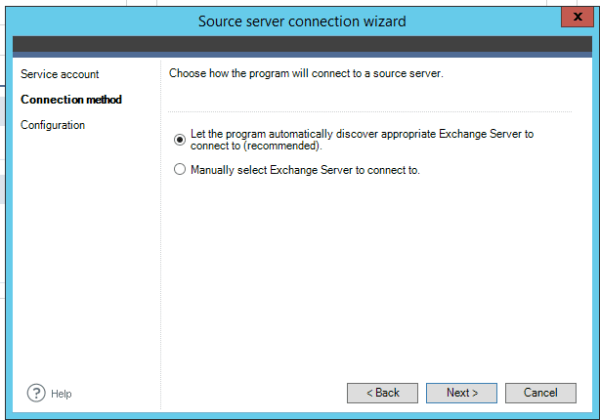
Here we have 2 options to establish a connection

First one will discover the source ews url automatically if its resolvable from the server where this software is installewd.

Second option where we need to manually enter the CAS server FQDN and EWS URL .

Code4

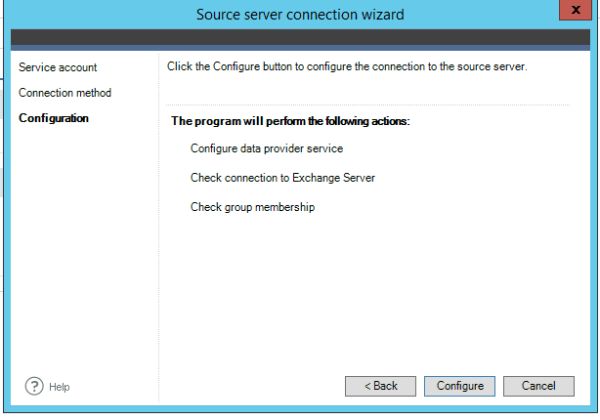
post which we will get the below screen

Code5

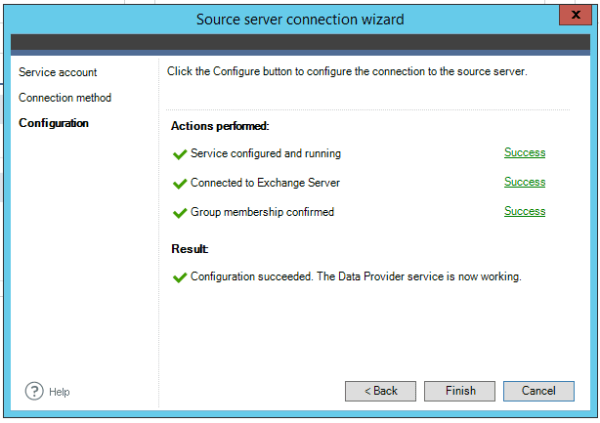
After successful configuration you will get a green signal as below.

Code6

The same procedure needs to be followed in the target domain as well .

Need to install the Target server as well

CD9

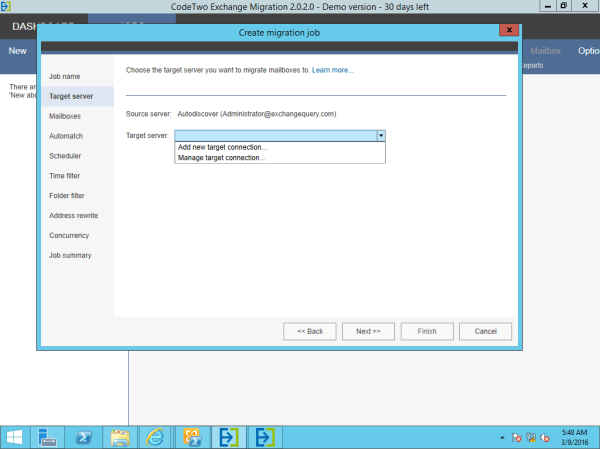
Once after the source and target domains are defined and successful you can create a new Migration Batch.

Good Features which have identified in this application are below

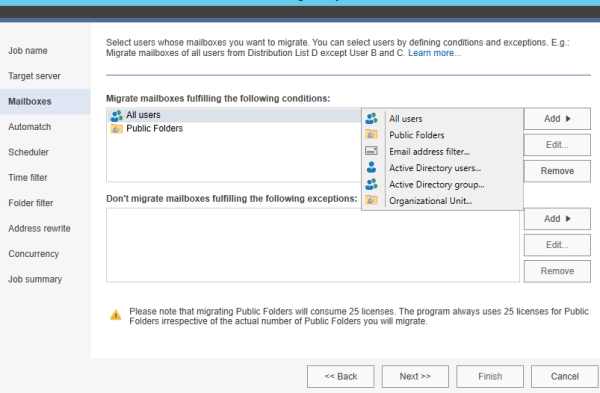
We have an option to choose the migration batch per OU , Users , Group etc..,

33


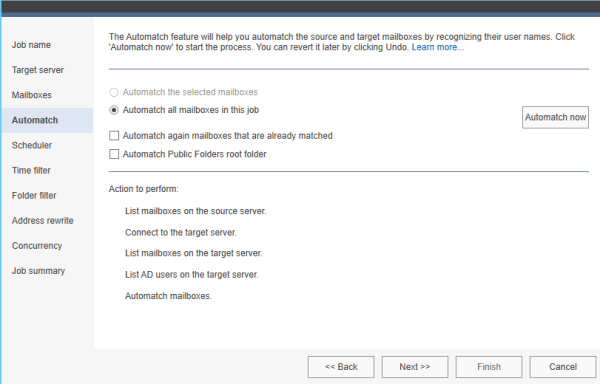
You have an option to auto-match the MEU as well

Note: You have to choose the option Auto-match selected mailboxes  only  if similar already existing users are present in the target domain on a different OU.

CD16

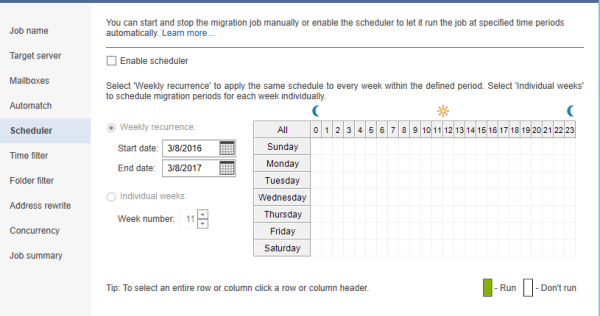
We have an option to schedule the migration as well  which is really good.

CD17

The amazing option which is found really beneficiary is below

This is something great option which will help in planning for a migration where we have a weak n/w bandwidth between the source and the forest. By having this we can very well plan a smooth migration without choking the network bandwidth in these kind of scenarios.

CD18


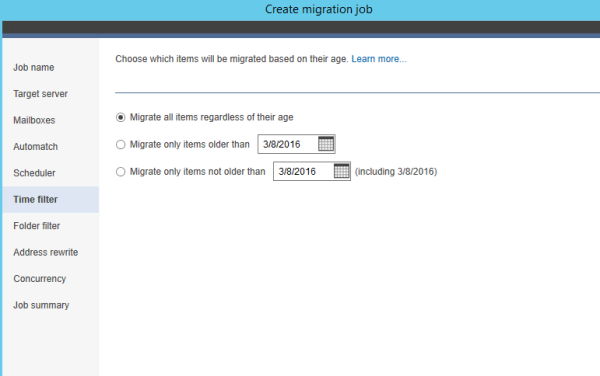
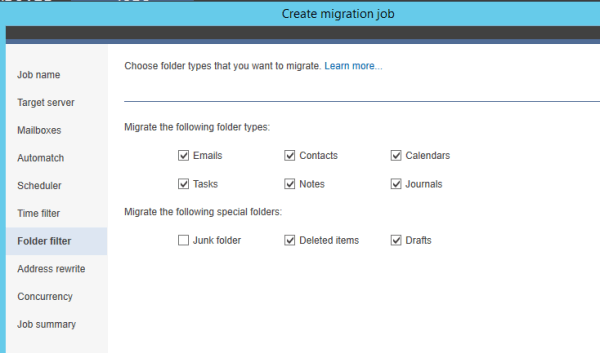
Finally we have an option to choose only the required items to migrate

CD19

This option is very amazing for scenarios where a company is merging or during acquisition.

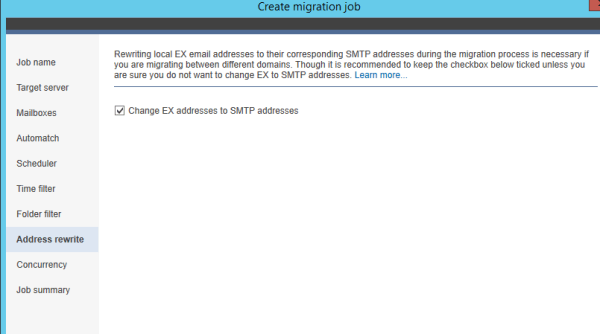
CD20

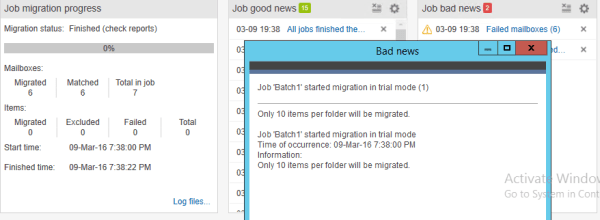
Finally we can view the migration job status in the console as below

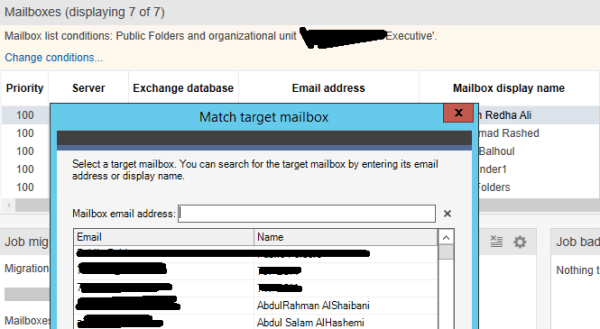
We have an option to manually choose the target mailbox as well.

Test333


CM3


It keeps us posted about the good status and bad status about the migration as well which is very good.

We also have an option to send notifications to admin mailbox about the migration status as well.

CM6

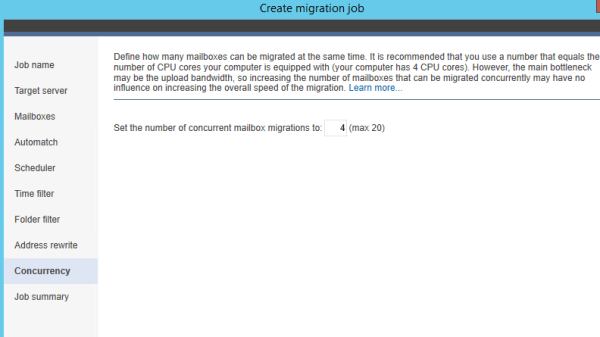
We have an option to set the maximum number of concurrent moves as well

Cm

Conclusion:

As per my understanding this CodeTwo software uses an excellent coded API .When configured all the prerequisite for the cross forest migration this works in the background with the EWS and gives us these many options features during the migration.

This makes the migration job very smooth and keeps the admin informed about the migration status.We can customize the cross forest migration based on our requirement by using this tool.Once the migration is done you need to perform the normal procedure of shifting the MX records and you are done.

To get Started with them you can refer more on this  CodeTwo Migration

Thanks & Regards

Sathish Veerapandian

MVP – Office Services & Servers

Extending Persistent Chat on Mobile Devices

Currently Skype for business persistent Chat is not supported on mobile devices by default. Only the Lync and Skype for Business  desktop client supports Persistent Chat.

To extend this feature on mobile devices we need to bring an additional component software from MindLink. Mind Link Software is a Microsoft Gold Partner who is offering support for Persistent Group Chat on mobile devices (iOS, Android and BlackBerry). Mind-link are the only developer available at the moment who would be able to fill the gap and extending this functionality to the mobile devices.

In this article we will have a look at configuring MindLink software for Persistent chat feature on mobile

You can download the evaluation version from the below Link

http://www.mindlinksoft.com/products

Basically  they have 3 servers in their architecture which are having different roles if we consider as a whole package.

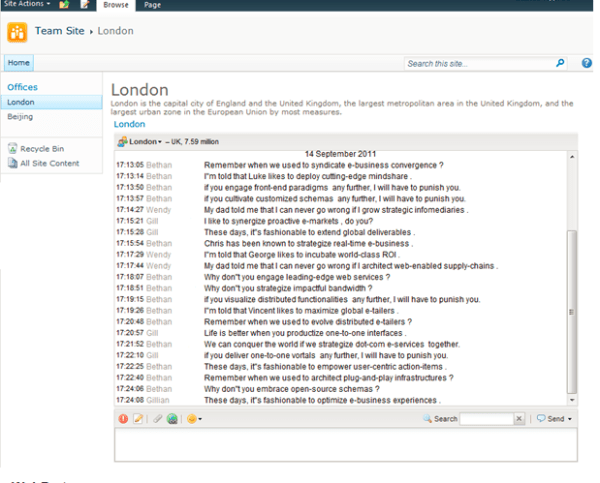
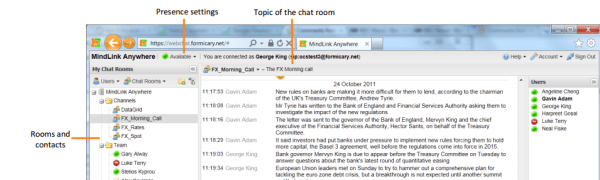
1) Mind Link Anywhere server – Can be used for Having corporate Persistent chat feature on the Web(like Whats-app web) and integrating SharePoint sites with the chat services.

E.g. below for Mind Link Anywhere :

Having persistent chat on the web

Test.png


Having this chat feature enabled on the SharePoint sites

3.png

2) MindLink Integration server – Used for integrating social  News Feed and  social twitter feed.

3) MindLink Mobile Server – Used for integrating with our persistent chat pool.

So we require only one server at this point to extend persistent chat functionality to the mobile devices.So now lets look into the steps to extend the persistent chat functionality alone  on the mobile devices since we are focusing only on them in this blog.

Hardware Requirements:

Each host machine should meet the following minimum requirements:

  • Dual or Quad core, 64-bit CPU (Minimum 2.4GHz)
  • 4GB RAM
  • Gigabit Ethernet connection
  • 1Gb disk space (80Mb for installation of binaries and up to 1Gb for Preferences to support over 1000 users)
  • Additional Disk Space may be required for storing log files, minimum of 100MB
  • Windows Server 2008 R2, 2012, or 2012 R2

Readiness for the persistent chat integration:

  • A trusted application pool needs to be created between your Lync/SFB server and the MindLink server FQDN or pool FQDN if its multiple servers based on the environment.
  • An URL must be decided for the MindLink server to publish them externally so that users can access them from mobile devices for persistent chat.
  • An SSL certificate must be purchased for the external URL for secure communication.
  • An internal certificate from Trusted CA must be placed in the MindLink server to trust this application pool.
  • Apple device APN’s certificate must be placed on the MindLink server for Apple devices push notifications and revocation check.

Ports and protocol requirements :

  • Port 7072 for socket server needs to be opened
  • Port 7074 for web service needs to be opened
  • Port 7073 for file service needs to be opened
  • APN port 2195 for gateway.push.apple.com needs to be opened


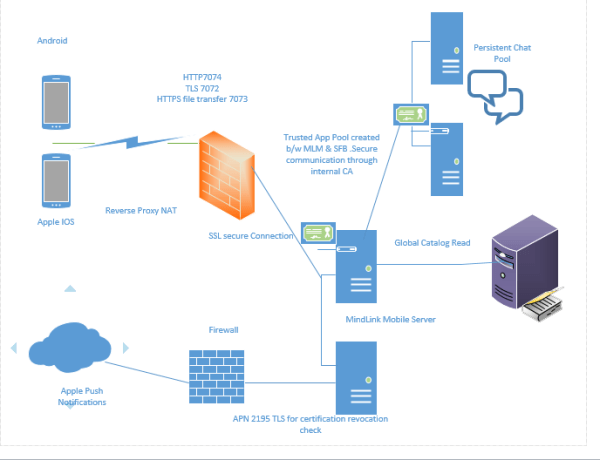
Overall the Architecture of the MindLink provision should look like below


MindLink

Installation :

The installation of the software is very simple. All you need to do is download and install the Mindlink mobile on the new server . MindLink uses REST API. It integrates data from existing Lync servers and persistent chat groups through the trusted application pool.
This allows users to access and discuss information within the right context.
MindLink API provides a straight forward web services layer that simplifies the publishing and dependency on .net platform.

Make sure that you have the local trusted CA, Public SSL for the url published and the apple device APN’s placed on that server in the local computer account.

After this is done we just need to enter the url in the location , import the license file from Mind Link support and start the Mind Link service.

After this what happens is that when a user logs in from the mobile client it reaches the MindLink server. It identifies a trusted application created between the MLM and Lync. Post verification of the user account it provides successful authentication.

You might face some challenges in these customized non standard ports on the firewall to the internet and to the server apart from that rest all would be smooth.

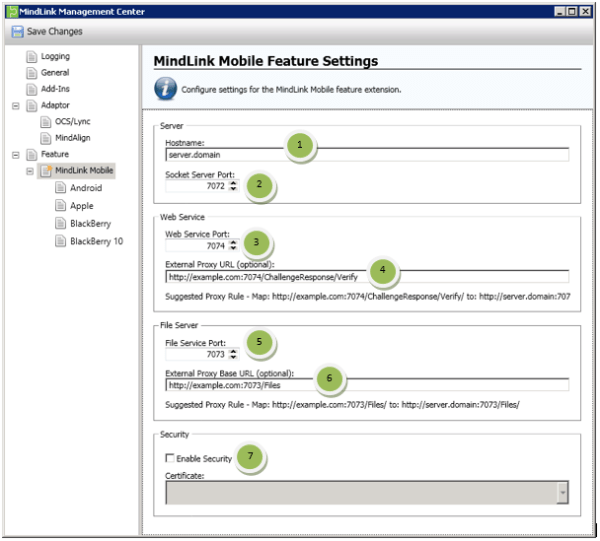
An example below of entering the external host name

Note: Only the first hostname URL is mandatory and rest all are optional. Enter the URL name here that will be publishing outside.

image015.png


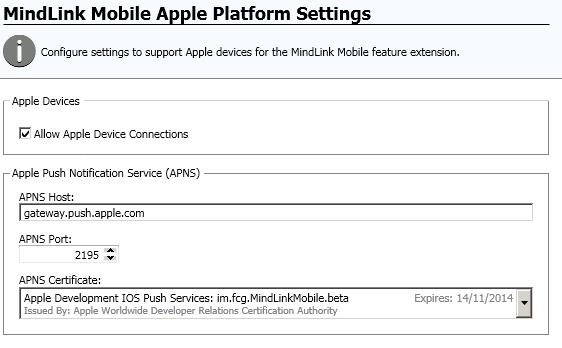
This is an example for apple device connection settings

image017

MindLink Mobile App Experience

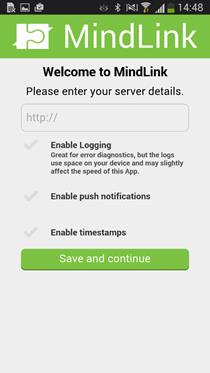
After successful configuration we just need to enter the URL that has been published externally for this service

image062

After successful login users will have the below option

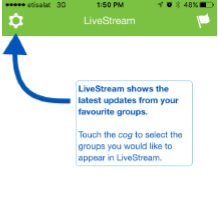
They can see live streaming of the persistent chat groups where they are member of

They can send and receive  messages in the persistent chat

They can search for persistent chat groups

They can search and IM individuals

Users can receive IM notifications even if they are not logged in to their Lync/SFB mobile client

Users can search for persistent chat messages, hashtag and mention option is also there.

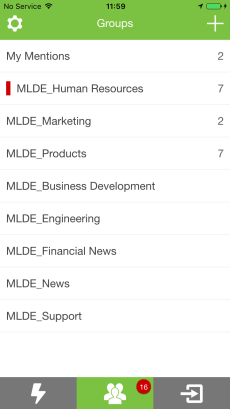
Visible Persistent Chat Groups

image4.3a.jpg

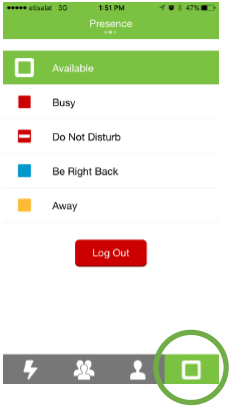
Able to change the IM and Presence

P1

Live streaming of the persistent chat can be seen

P2.png

Overall Features & Limitations:

  • Its a secure Enterprise Group Chat compatible with Microsoft Lync & Skype for Business.
  • IM Presence can be updated.
  • They cannot participate in audio and video calls from this application.
  • Currently users have the ability to open files which are sent from Lync desktop.
  • File Transfer and sharing from the application is not available at the moment.However an option to insert a weblink option in the chat is available.
  • Custom Ports for the application to be accessed from externally is little bit difficult. Its not possible to change them to the default ports since the application API is configured to bind and listen on these ports 7072,7073 & 7074 only.

Thanks 

Sathish Veerapandian

MVP – Office Server & Services


Exclaimer signature manager for on-premise

Maintaining the signature format uniformly for all the users is really a difficult task.Also the signature format will be changing on department, user and job role basis.

At times there might be a requirement to modify the signatures for departments based on events as well.

As an admin it  will be very difficult if you are not having any centralized signature system for the messaging systems.

Out of the available signature applications in the market i always prefer Exclaimer based on their support and options available in their product. In this article we will have a look at configuring the Exclaimer Signature and run through some of the options available in their product.

The installation and configurations are very simple since it is just a transport agent which will be triggered in the categorizer  part and signature will be applied. So this application has to be installed on a server where the transport categorization takes place.

In Exchange 2010 this application needs to be installed on the Hub Transport server

In exchange 2013 & 2016 it has to be installed on Mailbox servers.

One thing we need to make sure is that it has to be installed on all the HUB servers if its exchange 2010 and all the mailbox servers if its exchange 2013 & 2016. This is because the Mail-routing can happen in any of the available transport services and this application needs to be there to trigger in the categorization part.

The installation is pretty simple and straight forward which is very easy .Just need to download the application and install them.

The application can be downloaded from below url

https://www.exclaimer.ae/signature-manager-exchange-edition/download

Ex1

We have the option to keep a backup of the previous configurations which will be easier to revert.

There is option called remote deployment where we need to configure a shared folder for the exclaimer images, configuration files to be stored in a common location so that all the transport servers can be updated without any delay.

EX01.png

Below are the options available for the sent items configuration which are pretty much easier to understand.

It has a temporary file folder where it processes all the signature as a cache before applying them. You can specify a drive on your own.

Ex03

After a successful installation we  will get a screen as below

We can have multiple signature policies based on department, Organizational Unit and apply to respective ones.

Ex09

So this signature pulls all the information like Name, Company, Phone Number ..etc from the information present in the mailbox.

So all we need to do is to create a new policy choose and apply the desired values as below from the new created template

Ex04

We have an option to change the element behavior , layouts as well.

ex05

Note: We need to make sure that all the user information like Name, Phone Number, Company are updated. Only then it will update the information from the User object and reflecting in the signature. If the field is not updated then the information will show empty.

The signature can be customized further as well by adding an image, hyperlink to the attached image to them. All kinds of alignments, layouts can be done for the same.

Ex11

Moreover we have an option to edit the source code of the HTML which is a great amazing feature. By having this option we can customize the signature templates of our own according to the requirement.

Ex12.png

There are multiple options available to apply signature based on the requirement.

An example below.

EX8

Also we can set exceptions for few users who does not like to have this automated signature policy.We have an option to apply the signature only on a specific date and after that it will be disabled automatically.

There are more features and options available to explore on this product.

Overall we will get a very good support, latest updates, very simple installation configuration  and more features available to customize with this  exclaimer application. And so far with all versions of exchange this product has been always a bread and butter and haven’t caused any issues in terms of considering them as a third party Transport Agent.

Thanks & Regards
Sathish Veerapandian

MVP – Office Servers & Services

Connect Bridge – Synchronize the Exchange Mailboxes

If  you have more Exchange mailboxes  with Multiple servers in different sites , or  you have a hybrid setup in your organization we would always like to keep these mailboxes synchronized without any delay.

This article will describe one solution that brings synchronization of mailboxes to reality with a product named  CB Exchange Server Sync.

The CB Exchange Server Sync Tool is an application dedicated to synchronize Microsoft Exchange user folders. Users and folders can be located either on the same version and instance of Exchange Server or they can be located on multiple instances and different versions.

The tool is a Windows service that performs synchronization of selected mailbox folders pairs based on periodical run. You can specify the synchronization pairs via Manager Tool (UI for configuration of CB Exchange Server Sync), which is distributed within the installation package.

Supported Exchange versions:

  • Microsoft Exchange Server 2010
  • Microsoft Exchange Server 2013
  • Office 365

Below are the key features identified in the product:

  • Synchronize email folders
  • Synchronize contacts
  • Synchronize tasks
  • Synchronize calendar
  • Synchronization between different Exchange versions
  • Easy to install and to maintain
  • Separate Custom configuration for each synchronized user
  • Provides run-time information about the executed sync operations
  • Multiple tenants
  • One-way and two-way synchronization

Components involved in the Functionalities:

The synchronization tool consists of:

The synchronization service looks for the changes in the synchronization pairs and process the synchronization with help of Connect Bridge. The synchronization pair is the ‘structure’ of the two users and folders which will be synchronized (e.g.: user1@a.com user2@b.com Inbox folder).


1. Connect Bridge

Connect Bridge is used for internal communication with Microsoft Exchange. Connect Bridge is a powerful integration platform that allows you to connect to the target system through ODBC, JDBC driver and Web Service with 31 connectors. So basically, you can connect at least 31 target systems such as Exchange, Google, Microsoft CRM, SharePoint and many other LOB’s simultaneously in different environment (on prem., cloud, hybrid) and with a bidirectional communication. There is no need for you, as a developer, to study documentation and know the language of the target system. You can simply use SQL statements to communicate with the target system. To get a general overview about the architecture of the tool there is a bunch of useful videos and online documentation.

2. Sync Process Description

Most profound explanation is through a short showcase description. Let’s talk about synchronization of two Exchange accounts one on premise (2010) while the second is hosted on cloud (2013). Setting a connection strings as “Master” and as a “Slave” are just for an easy recognition, Connect Bridge handles both systems equally.

Below string example for MASTER & SLAVE connection

6666

The process is quite simple and straight forward. The application seeks for inserted, updated and deleted items within both synchronized mailboxes. This is done within Exchange quite simply. The Exchange provides possibility to obtain changes since some ‘time stamp’.

Below is the example of how the sync works without any delay

6667.jpg

After the application obtains information what was inserted, deleted or updated, the logic of the CB Sync has to decide which action needs to be done to perform corresponding operations correctly.

In case items are inserted on the “Slave side” the logic needs to import those inserted items to the “Master side” of synchronization and remember the item pairs internally because it is needed for next possible operations (update, delete). In other cases if update or delete occurs the logic needs to find internally the pair of the item and make corresponding operation.

Below video is a real time example of how the synchronization works


Final Conclusion:

CB Exchange Server Sync brings benefits to  example lawyers , Auditors who work for different companies, university teachers who teach on more universities, chairman of the board and basically to all people who need to arrange all their tasks, meetings and duties ordered perfectly in one Exchange app instead of logging on and off in multiple accounts which can lead to duplicate meetings, bad user experience, unnecessary business mistakes etc.

Worth mentioning is a feature which can cover privacy of Exchange users. Let’s say you have a department in your company with high security clearance using their own Exchange server and other departments which don’t have security clearance have their own Exchange server.

Problem arises when employee of Marketing Department needs to schedule a meeting for employees with high security clearance. They need to know exactly when is their schedule free without breaching security model of the company (access details of already set appointments).

CB Exchange Server Sync can reveal needed information to set up a meeting while still be able to protect security model of the company. This is one of the many scenarios you can cover with CB Exchange Server Sync.

In the near feature they are about to create the Software as a Service (SaaS) product out of it so it  could come closer to customers and simplify the whole process to “ready to use in one-click”.

Thanks 

Sathish Veerapandian

MVP – Office Servers and Services

Inplace upgrade from Lync 2013 to Skype for Business

For the first time in the enterprise platform Microsoft has given the option of an in-place Upgrade for its universal platform .

Since Skype for Business hasn’t changed much with Lync 2013 server architecture,and the hardware prerequisites remains the same. If we have a good hardware configuration or if you have recently migrated to Lync 2013 in your infrastructure this option completely makes sense to perform and inplace upgrade .
This will obviously help in reducing the IT cost for this new deployment and reducing the time required for this new deployment.

Recently our team had an experience in upgrading from Lync 2013 to Skype for business and i this article we will have a look at the best practices and the prerequisites that needs to be followed in the upgrade procedure.

Supported coexistence scenarios for the SFB in-place upgrade:

  1. Lync 2013 Standard standalone .
  2. Lync 2013 Enterprise Pool.
  3. Lync 2013 Multiple pools
  4. No upgrade path available from Lync 2010 to SFB.
  5. No upgrade from Lync 2010\2013 coexistence scenarios

Readiness for the upgrade:

  1. Take a snapshot backup all your servers, This will help you  to revert the changes on each server just in case if the upgrade wasn’t smooth with the downtime provided.
  2. Save the previous Topology and take a backup of them.
  3. Take a backup of file server.
  4. If the Lync 2013 is running on Windows Server 2008 R2 then its not recommended to perform an in-place upgrade.
    Never upgrade the OS of a Lync server. Install a new pool on a fresh OS and move all accounts and objects over . In-place upgrade will not help in this scenario.


Prerequisites for the upgrade:

1. net 3.5 on FE, Edge and mediation  servers.

2. Below hotfixes needs to be installed in following order.

https://www.microsoft.com/en-us/download/details.aspx?id=42162

https://support.microsoft.com/en-us/kb/2919355

https://support.microsoft.com/en-us/kb/2982006

3. RTC local instance should be Microsoft SQL server 2012 SP1 or later.

So make sure on the Lync 2013 FE’s and servers that we are going to upgrade should have a local instance of 2012 SP1 or later.

4.  One member server in the same domain where the lync pool resides.

On this we will be installing the SFB administrative tools , upgrade the existing topology and then publishing them.  It should be a non-lync server.

5.  All the lync servers needs to be updated to minimum  8308.815. Better to have the          latest version.

Upgrade can be done in the following order:

1.  Install the SFB Administrative tools on the newly introduced member server.

Upgrade the topology in the below order.

a) First upgrade the Front end pool.

b) Upgrade the persistent chat pool.

c) Upgrade the edge server pool.

d)  Upgrade the Trusted Application pool.

In-order to upgrade the topology perform the below :

Open SFB topology builder from the newly installed admin server – Right click on the front end pool – Select the option Upgrade to Skype for business server 2015 as below


01

This process will take few minutes and after it gets completed we need to publish the newly updated topology first.

Failing to do this and proceeding with other pools (persistent, edge, Trusted) will result in the  below error.

02

Once the topology is updated and published now we need to upgrade all of the existing lync 2013 servers to Skype for Business.

In-Order to perform that action  we just need to run the setup from each servers.

Note: If there is only one front end pool in the deployment (this should be the setup in most of the environments) the servers then there will be user interruption till the pools are upgraded. So it requires a downtime when performing this upgrade.

We need to run the below command to make sure that the replicas are up to date

Get-CsManagementStoreReplicationStatus

imp

Before running the setup we need to disable all the services on the existing front end services. Run the below command in the Lync management shell to perform the action
Disable-CsComputer -Scorch 

After running the above command make sure that you close topology builder, Lync Management shell , Deployment wizard . Make sure all consoles are closed for the upgrade to complete smoothly.
Once performing the above action just run the setup from each existing lync 2013 servers.Better to start with FE’s , Mediation , Director , Persistent and then Edge.
You will be prompted with the below screen.

RE.png

upgrade will go through the process as below

33

We will get a screen like below on a successful upgrade

3366556.png

We can continue to point all URLs to the existing pool since its an in-place upgrade and this make this task very easier.

Thanks & Regards

Sathish Veerapandian